
Hail Damage Roof Repair in Minneapolis
Spring and summer thunderstorms in the Twin Cities can drop hail in minutes and leave damage that is hard to see from the driveway. Our hail damage roof repair in Minneapolis starts with a careful look at the roof, clear photos of what we find, and an honest answer about whether you need a repair or a full replacement.
Hail does not always cause an immediate leak. A bruised shingle or cracked seam can hold for months and then fail during the next storm or freeze-thaw cycle. Checking the roof soon after a hailstorm gives you a record of the damage while it is fresh and before it gets worse.
If a storm just rolled through your neighborhood, call Minneapolis Roofing Company at (888) 657-0348 to request a free estimate.
How hail hits roofs
What Hail Does to Asphalt, Metal and Flat Roofs
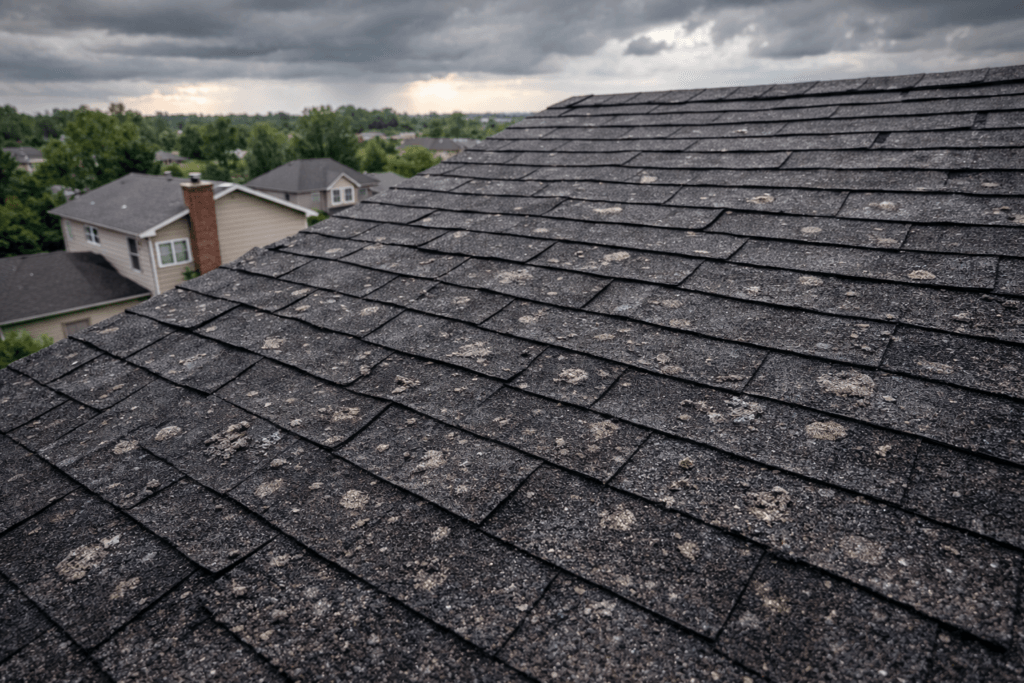
Hail affects every roofing material differently. Knowing what to look for on your type of roof helps separate real storm damage from normal aging.
Asphalt shingles
Most Minneapolis homes have asphalt shingles. The Insurance Institute for Business & Home Safety (IBHS) lists a random pattern of impact marks, bruises you can feel as soft spots, and cracks or breaks as the typical signs of hail on shingles. Ridge caps are especially vulnerable because they stick up and take direct hits.
Bruising matters because the hit can crack the mat underneath while the shingle still looks mostly intact. Over time, exposed spots weather faster and can start to leak.
Metal roofs
Metal panels often show hail as round dents. Many dents are cosmetic and do not affect how the roof sheds water. Damage becomes a functional problem when hail cracks the coating, loosens fasteners, bends seams or opens laps where water can get in. Learn more about these systems on our metal roofing page.
Flat and low-slope roofs
On membrane roofs over garages, additions and commercial buildings, hail can leave spatter marks, punctures, cracks or crushed insulation under the membrane. These are easy to miss because the roof is out of sight, and water may travel a long way before it shows up inside.
Spotting damage
Signs of Hail Damage on Your Roof
You can learn a lot without climbing a ladder. Walk around the house after a storm and look for these clues:
- Dents or spatter marks on gutters, downspouts, metal flashing, roof vents or the air conditioner
- Dents on mailboxes, fences, grills or patio furniture
- Piles of shingle granules collecting at downspout outlets
- Torn screens, chipped siding or cracked window wraps
- Pieces of shingle in the yard
- New water stains on ceilings or in the attic
IBHS notes that dents on gutters, A/C units and other metal surfaces help confirm that hail actually struck the property. It also cautions that granule loss on its own is not proof of hail. Normal weathering, manufacturing issues, installation marks and heavy rain can all cause it too, which is why a close inspection matters.
Please do not climb onto the roof yourself, especially when it is wet. Binoculars from the ground and photos of what you can see safely are enough to start.
Inspection
Inspecting and Documenting Hail Damage
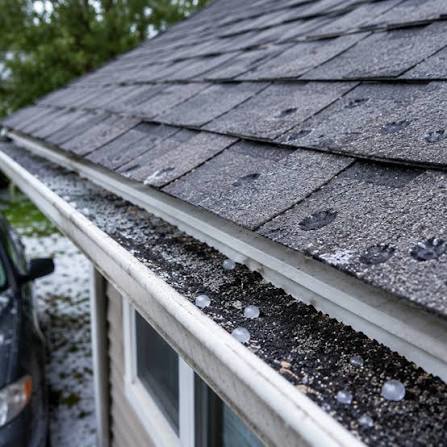
A good hail inspection is about evidence, not a quick glance. Our roof inspection after a storm typically covers:
- Collateral damage. Gutters, vents, flashing, siding and outdoor equipment, which help confirm the storm and its direction.
- Each roof slope. Hail often hits the slopes facing the storm harder, so every side is checked separately.
- Shingle condition. Bruises, cracks, exposed mat and broken edges, with close-up photos and a scale reference.
- Penetrations and flashing. Vents, skylights, chimneys and pipe boots, where a small crack can let in a lot of water.
- The attic. Fresh water stains, damp insulation or light coming through the deck.
You get the photos and a written summary of what we found. If you decide to file an insurance claim, that record and an itemized estimate give you something concrete to share with your insurer.
Document it yourself too
The Minnesota Department of Commerce recommends taking photos and video of all damage as soon as it is safe, before cleanup, and keeping a log of expenses and your contacts with the insurer. Write down the date and time of the storm and save photos of hailstones if you have them.
Think your roof took a hit?
Get the damage checked and documented before the next storm finds the weak spots. Call (888) 657-0348 to request a free estimate.
Repair or replace
Hail Damage Roof Repair in Minneapolis: Repair or Replace?
Not every hailstorm means a new roof. The right answer depends on how widespread the damage is, how old the roof is and whether matching materials are still available.
When a repair usually makes sense
- Damage is limited to a few shingles, one slope, or vents and flashing
- The roof is relatively young and in good condition otherwise
- Matching shingles or panels are still available
When replacement is often the better choice
- Bruising and cracks are spread across most slopes
- The roof was already near the end of its life before the storm
- Repairs would leave a patchwork of mismatched materials
- The decking or underlayment is damaged, not just the surface
Older roofs can be harder to repair because aged shingles are brittle and may crack when crews lift them to slip in new ones. If replacement is the better path, our roof replacement page explains how the process works. If you are replacing anyway, it is worth asking about impact-resistant shingles. IBHS notes that shingles tested to the UL 2218 or FM 4473 hail standards are the ones that earn its higher performance ratings.
For smaller problems, our crews handle targeted shingle and flashing repairs to get the roof watertight again.
Insurance claims
Working With Your Insurance Claim
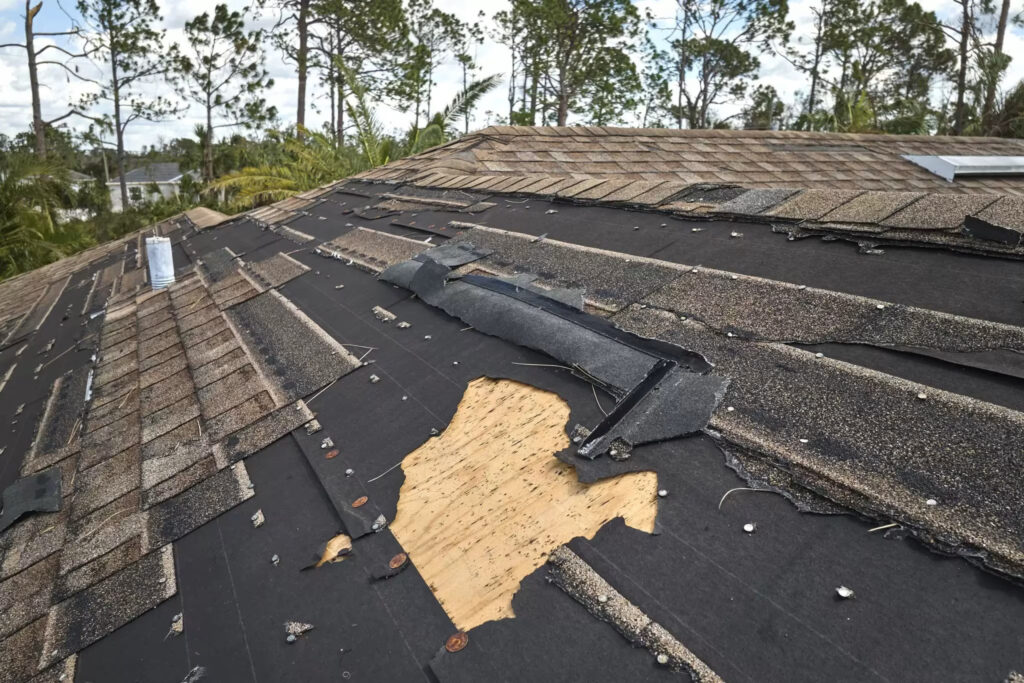
Hail damage is often covered by homeowners insurance, but every policy is different and the claim is between you and your insurer. Here is how the process generally works, based on guidance from the Minnesota Department of Commerce.
- Contact your insurer or agent. Report the damage, have your policy number ready, and follow the claim instructions you are given.
- Prevent further damage. Commerce advises making reasonable temporary repairs, such as tarping a damaged roof, because additional damage may not be covered if you do not. Keep receipts.
- Meet the adjuster. The insurance company’s adjuster inspects the property. Ask for identification, the next steps, and whether you or the insurer will get repair estimates.
- Get an itemized estimate. A detailed, written estimate from a roofer helps everyone compare the scope of work.
- Review the settlement and schedule the work. Ask your insurer about timelines and how payments are made.
We can inspect the roof, provide photos and an itemized estimate, and do the repair or replacement work. We do not interpret your policy or negotiate your claim. Under Minnesota law that is the job of you, your insurer, or a licensed public adjuster if you choose to hire one.
Minnesota consumer rules
Minnesota Rules for Hail Damage Roofing Contractors
After big storms, out-of-town crews often go door to door. Minnesota has specific rules for residential roofers and contractors paid from insurance proceeds. Knowing them helps you choose among hail damage roofing contractors in Minneapolis, MN with confidence.
Minnesota Statutes section 325E.66
- A residential contractor may not offer or promise to pay all or part of your insurance deductible, or offer you compensation for allowing an inspection, filing a claim or referring others.
- A contractor may not give you an agreement authorizing repairs without also giving you a good faith, itemized estimate of the cost of services and materials.
- A contractor may not interpret your policy, advise you on coverage, or adjust the claim on your behalf unless licensed as a public adjuster.
- The contractor must give you written notice of these requirements with its initial estimate.
Minnesota Statutes section 326B.811: right to cancel
If you sign a roofing contract that will be paid from insurance proceeds, you can cancel it within 72 hours after your insurer notifies you that the claim has been denied. Cancellation is done by written notice to the contractor at the address in the contract. The contractor must give you a notice of cancellation form before you sign, and must return your payments within ten days after cancellation, though a contractor that performed emergency services is entitled to be paid for them.
Practical tips from state agencies
- The Department of Commerce notes you do not need to sign anything to get an estimate or to let a contractor talk to your insurance company.
- Make sure any contract lists the work, the materials and a total price.
- The Department of Labor and Industry recommends checking any contractor’s license and complaint history through its online license lookup before you sign.
- Be cautious with large upfront payments and high-pressure sales tactics.
After the storm
What to Do in the First Few Days After Hail
The steps you take right after a storm can make the repair and any claim go more smoothly.
- Stay off the roof and away from any downed power lines.
- Photograph damage around the property, including dented gutters, siding and outdoor equipment.
- Check ceilings and the attic for new stains or drips.
- If water is coming in, protect belongings and get the roof covered temporarily.
- Schedule an inspection so damage is documented while it is fresh.
If a storm has left an active leak, broken skylight or missing section of roof, start with our emergency roof repair page for what to do right now.
Common Questions
Frequently Asked Questions
Answers to common questions about hail damage roof repair in Minneapolis.
How do I know if my roof has hail damage?
Look for dents on gutters, vents, the A/C unit and outdoor furniture, granules piling up at downspouts, and new ceiling stains. A close inspection is needed to confirm bruised or cracked shingles, since some damage is not visible from the ground.
Can hail damage cause leaks later?
Yes. Bruised shingles and cracked seams may hold at first and then fail after more storms or freeze-thaw cycles. That is why it helps to inspect and document damage soon after the storm.
Should I call my insurance company or a roofer first?
Many homeowners get an inspection first to see whether there is real damage, then contact their insurer. Either way, report the claim to your insurer promptly and make temporary repairs to prevent further damage.
Can a roofer pay my insurance deductible in Minnesota?
No. Minnesota Statutes section 325E.66 prohibits residential contractors from offering or promising to pay all or part of your insurance deductible.
Can I cancel a roofing contract if my claim is denied?
Under Minnesota Statutes section 326B.811, you can cancel a roofing contract to be paid from insurance proceeds within 72 hours after your insurer tells you the claim is denied. You cancel by written notice to the contractor’s address in the contract.
Is a dented metal roof always hail damage that needs repair?
Not always. Many dents are cosmetic, but cracked coatings, loosened fasteners or damaged seams can let water in and should be repaired.
Do I need a full roof replacement after hail?
Only if the damage is widespread, the roof was already near the end of its life, or repairs would not hold or match. Limited damage can often be repaired.
Get a Clear Answer on Your Hail Damage
Minneapolis Roofing Company can inspect your roof, document what the storm did, and recommend repair or replacement. Call (888) 657-0348 or request a free estimate today.