
Flat Roof Replacement & Flat Roofing in Minneapolis
When a flat roof has reached the point where patching no longer works, replacement is a chance to fix more than the leaks. We handle flat roofing in Minneapolis from start to finish, including full tear-offs, new installations and re-roofing on commercial buildings, apartment buildings, garages and home additions.
A new low-slope roof is a system, not just a membrane. The material you choose, the insulation underneath and the way water drains off the roof all affect how it handles Minnesota winters. This page walks through those choices so you know what to ask about before you commit.
Call (888) 657-0348 or request a free estimate. We respond within 24–48 hours. If you only need a leak fixed, our page on repairing a leaking flat roof is a better place to start.
Is It Time?
Signs Your Flat Roof Needs Replacement
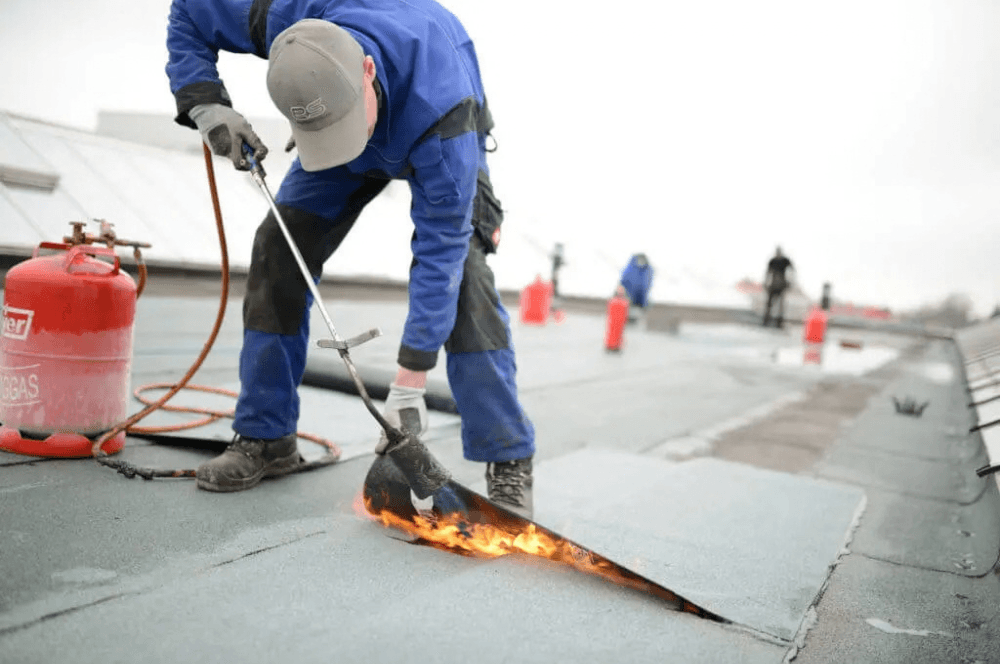
Not every leaking flat roof needs to come off. But some problems mean repairs are only buying time. A flat roof replacement in Minneapolis is usually worth planning when you see:
- Leaks in several different areas, or leaks that come back after repair
- Large areas of wet insulation found during an inspection or moisture survey
- A membrane that is brittle, cracked, shrinking or pulling away from walls and edges
- Widespread ponding that the current roof slope and drains can’t handle
- Soft or spongy areas when you walk the roof
Codes also limit when a new roof can go over an old one. Under model building code reroofing rules, re-covering generally isn’t allowed when the existing roof is water-soaked or deteriorated, or when there are already two layers of roofing. In those cases, the old roof has to be torn off down to the deck.
Membrane Choices
TPO vs EPDM vs PVC vs Modified Bitumen
Four materials cover most low-slope roofs in the Twin Cities. None is best for every building. The right one depends on how the building is used, what’s on the roof and your budget.
TPO Roofing
TPO (thermoplastic polyolefin) is a single-ply membrane with heat-welded seams. It’s most often white, though other colors are available, and common thicknesses are 45, 60 and 80 mil. TPO is a cost-effective choice for warehouses, retail buildings and offices, and TPO commercial roofing is the most common membrane on the new projects we see. TPO resists many chemicals, but not greases and oils, so it’s a weaker choice near restaurant exhaust.
EPDM Rubber Roofing
EPDM is a thermoset synthetic rubber membrane, naturally black, available from about 45 to 90 mil. Its seams are glued or taped rather than welded. EPDM commercial roofing has been used in Minneapolis for decades and usually has a low installation cost, though seams need attention over time. EPDM has limited resistance to oils and grease and shouldn’t contact asphalt-based products.
PVC Roofing
PVC is a thermoplastic, heat-welded membrane, typically 50 to 80 mil, that resists most chemicals including oils and grease. That makes PVC roofing a strong option for restaurants, food processing and buildings with rooftop exhaust. PVC is not compatible with asphalt materials, so it has to be separated from old asphalt roofing during a re-cover.
Modified Bitumen
Modified bitumen is an asphalt-based sheet reinforced with polyester or fiberglass, installed in multiple plies. SBS products can be torch-applied, set in hot asphalt, cold-applied or self-adhered; APP products are usually torch-applied or self-adhered. The multi-layer build-up makes it tough under foot traffic, and it’s common on smaller commercial buildings and residential flat roofs.
Quick Comparison
- Lowest upfront cost: often EPDM, with TPO close behind
- Grease and oil exposure: PVC
- Welded seams: TPO and PVC
- Heavy foot traffic and multiple plies: modified bitumen
- Light-colored, reflective surface: TPO, PVC or white EPDM
Insulation
Insulation and Energy Code for a New Flat Roof
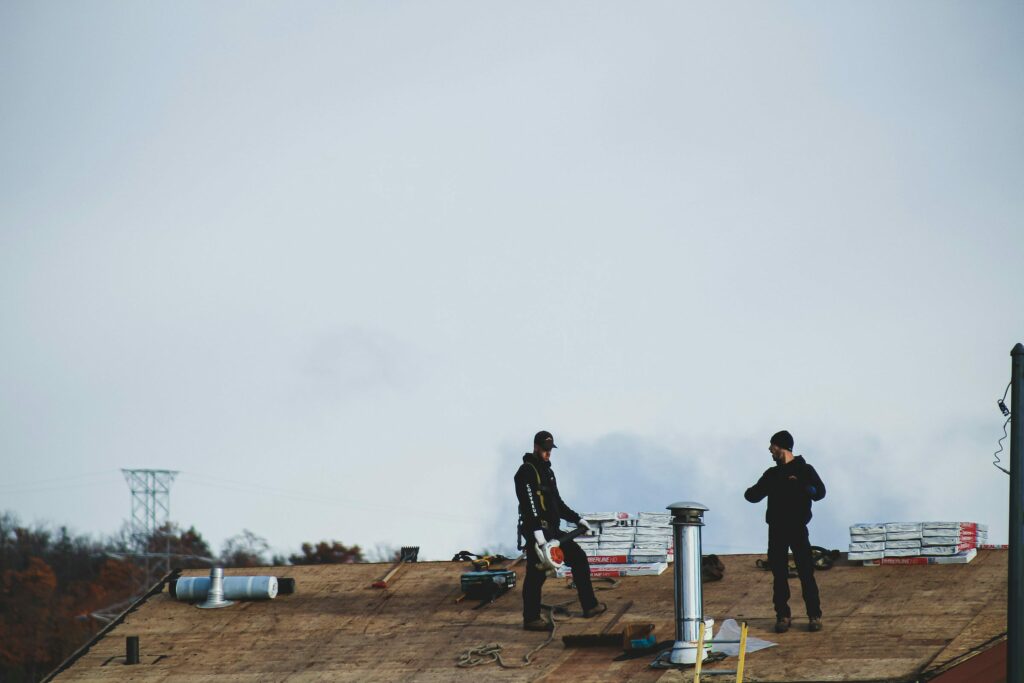
On a low-slope roof, most of the insulation sits on top of the deck, directly under the membrane. A replacement is the one time it’s practical to bring that insulation up to current standards.
What Minnesota Code Requires
Hennepin County is in climate zone 6 under Minnesota’s energy code. Local permit guidance for the 2024 Minnesota Commercial Energy Code lists R-30 continuous insulation above the deck for commercial roof replacements, with an exception allowing the maximum insulation that fits when existing conditions limit thickness. Minnesota’s Department of Labor and Industry notes that continuous roof insulation provides roughly R-4 to R-5 per inch, so meeting that target usually means several inches of board insulation.
Curbs, Edges and Equipment
Thicker insulation raises the roof surface, which affects everything around it. Minnesota’s Department of Labor and Industry says rooftop equipment curbs must be insulated to at least R-10 when a roof is replaced. Edge metal, door thresholds, wall flashings and drain heights may also need adjustment. Planning these details early avoids surprises and change orders.
Cover Boards and Attachment
Many systems include a cover board over the insulation to protect it from foot traffic and hail. Insulation can be mechanically fastened or adhered, and wind uplift requirements typically call for enhanced fastening at roof perimeters and corners.
Planning a Flat Roof Replacement?
We’ll walk your roof, explain your membrane and insulation options, and give you a clear plan. Call (888) 657-0348.
Drainage
Drainage and Tapered Insulation
A flat roof isn’t supposed to be truly flat. Minnesota’s building code requires low-slope membrane roofs, including TPO, PVC, EPDM and modified bitumen, to have a design slope of at least one-quarter inch per foot (2 percent) for drainage, unless the roof is specifically designed to hold water.
Many older Minneapolis buildings were built with dead-level decks. During a flat roof replacement, tapered insulation solves that by adding slope with boards that get thicker toward the high points. Crickets and saddles direct water around curbs and toward drains.
Good drainage matters more here than in milder climates. NRCA defines ponding as water still sitting on a roof 48 hours after rain. In Minnesota, that water also freezes, adds weight and works into seams during thaw cycles. A replacement is the best opportunity to fix low spots for good instead of chasing them with repairs.
- Tapered insulation to create positive slope to drains
- Crickets behind curbs and between drains
- New drain bodies, strainers or scuppers where old ones are failing
- Overflow drainage checks where the building design calls for it
Cold Climate
Flat Roofing in Minneapolis: Cold-Climate Considerations
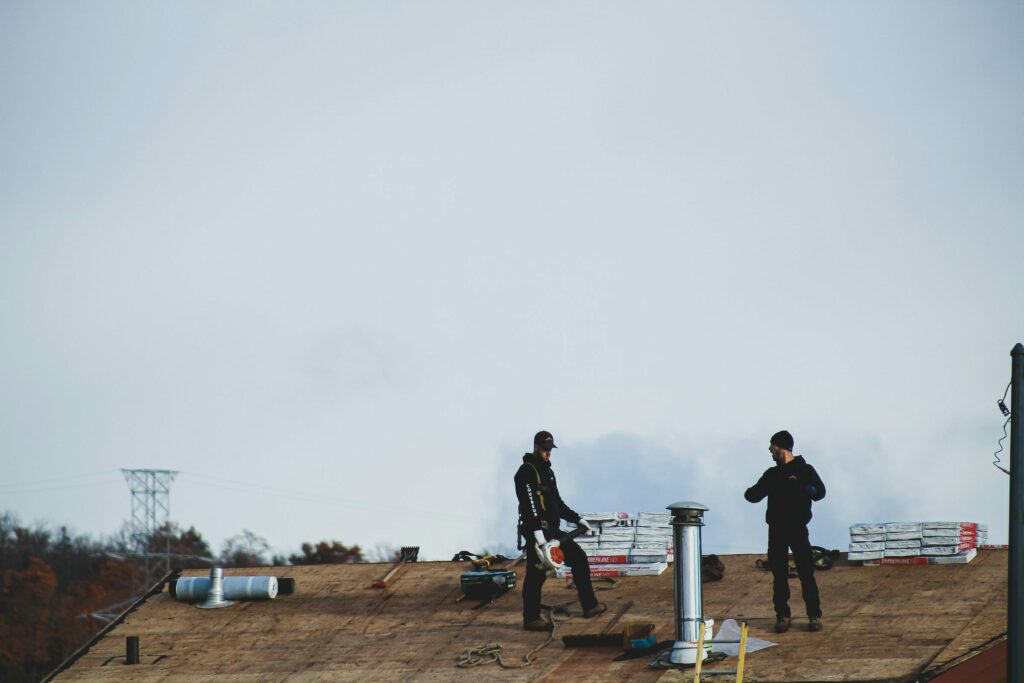
A flat roof in Minneapolis has to deal with deep cold, snow that can sit for weeks, and repeated freeze-thaw cycles. Those conditions shape several design decisions.
Snow Load
Minnesota’s building code sets the ground snow load for Hennepin County at 50 pounds per square foot. Adding a heavier roof system or extra layers on an older building may call for an engineer’s review, especially where snow drifts against parapets or taller walls.
White or Black Membrane?
The U.S. Department of Energy notes that cool, reflective roofs reduce cooling loads but can carry a winter heating penalty, and in colder climates that penalty can outweigh the summer savings. For Minneapolis buildings, membrane color should be weighed against how the building is heated and cooled, how much snow sits on the roof, and the owner’s priorities. White TPO and PVC are still widely used here, and black EPDM remains a common choice.
Condensation and Vapor Control
Warm, humid interior air can condense inside a roof assembly in cold weather. Buildings with high indoor humidity, such as pools, kitchens and some multifamily buildings, may need a vapor retarder as part of the new roof. The DOE also notes that proper design can prevent condensation problems.
Installation Timing
Some adhesives and primers have minimum temperature limits, which affects how and when certain systems can be installed. Mechanically fastened and heat-welded systems are often more flexible in cool weather. We’ll explain how timing affects your options.
The Process
What a Flat Roof Replacement Involves
- Assessment. We inspect the roof, check drains and details, and use moisture surveys and test cuts on larger roofs to see what’s under the membrane.
- System design. We recommend a membrane, insulation thickness and drainage plan for your building, and explain the trade-offs.
- Permits and scheduling. We plan the work around your building’s use and explain any permit requirements for the project.
- Tear-off or re-cover. Old roofing is removed down to the deck when required, and damaged decking is repaired.
- Insulation and membrane. New insulation, tapered systems, cover boards and membrane are installed, then flashings, edges and drains are completed.
- Final walkthrough. We clean up and review the finished roof with you.
For commercial properties, we phase the work so only a section is open at a time and each area is sealed at the end of the day. Learn more on our commercial roofing services page. For pricing factors on all roof types, see our roof replacement cost guide.
Warranties
Understanding Manufacturer Warranties on Flat Roofs
Most TPO, EPDM, PVC and modified bitumen products come with manufacturer warranties. Terms vary widely by product, membrane thickness and system design, and they usually require the roof to be installed to the manufacturer’s specifications and maintained over its life.
When comparing quotes, ask what each warranty actually covers (materials only or materials and labor), how long it lasts, and what maintenance is required to keep it valid. A thicker membrane or a fully engineered system often qualifies for longer manufacturer coverage.
Looking for options beyond flat roofing? Our Minneapolis roofing company also handles steep-slope and metal roofing projects.
Guides & Resources
Flat Roofing Guides
EPDM, TPO, PVC, modified bitumen and roll roofing explained, plus how to deal with ponding water on low-slope roofs.
Common Questions
Frequently Asked Questions
Answers to common questions about flat roofing in Minneapolis.
Which flat roof membrane is best for Minneapolis?
TPO, EPDM, PVC and modified bitumen all perform in Minnesota when installed correctly. The best choice depends on rooftop exposure to grease or chemicals, foot traffic, budget and how the building is heated and cooled.
Can a new flat roof go over my old one?
Sometimes. Codes generally don’t allow a re-cover if the existing roof is water-soaked or deteriorated, or if there are already two layers, so an inspection is needed first.
How much insulation does a replacement flat roof need in Minneapolis?
Local guidance for the 2024 Minnesota Commercial Energy Code lists R-30 continuous insulation above the deck for commercial roof replacements, with exceptions where thickness is limited. Requirements for homes and specific buildings should be confirmed with the city.
What is tapered insulation?
Tapered insulation is board insulation cut to different thicknesses to create slope toward drains. It’s the most common way to fix ponding on a flat roof during replacement.
Is a white roof a good idea in Minnesota?
White membranes reduce summer cooling loads, but the Department of Energy notes they can add a winter heating penalty in cold climates. It’s a building-by-building decision.
How long does a flat roof replacement take?
It depends on the size of the roof, the amount of tear-off and the weather. We give you a schedule during the estimate and phase larger jobs so the building stays usable.
Do you replace flat roofs on homes too?
Yes. We replace flat and low-slope roofs on garages, porches, additions and homes, as well as commercial and multifamily buildings.
Get a Free Flat Roof Replacement Estimate
Whether you’re leaning toward TPO, EPDM, PVC or modified bitumen, we’ll help you choose the right system for your building. Call (888) 657-0348 or request a free estimate.