
Longfellow Roofing in Minneapolis: Caring for a Neighborhood of Bungalows
Longfellow is bungalow country. Most of the community, which runs from Hiawatha Avenue east to the Mississippi River gorge, was built between 1906 and the 1920s, after streetcar service opened it up, and it is known for its 1920s Craftsman bungalows. Many homes here are now a century old, with roofs that have been replaced several times over the original framing. Thoughtful Longfellow roofing in Minneapolis means respecting what makes these houses work and fixing what a hundred winters have done to them.
Minneapolis Roofing Company helps homeowners and property owners in Cooper, Hiawatha, Howe, Longfellow and Seward arrange roof repairs, inspections and replacements. Here is what to know about the community’s homes and the roofing issues that come with them.
Call (888) 657-0348 or request a free estimate. We respond within 24–48 hours.
The Community
Neighborhoods in the Longfellow Community

The Longfellow community covers about five square miles of southeast Minneapolis, bounded by I-94 to the north, the Mississippi River to the east and Hiawatha Avenue and the Metro Blue Line to the west. It is made up of five neighborhoods:
- Seward: the northernmost neighborhood, along the river, with Franklin Avenue businesses such as the Seward Co-op and the Milwaukee Avenue Historic District.
- Longfellow: the neighborhood that shares the community’s name, west of Cooper and north of Howe, bordering Corcoran and East Phillips to the west.
- Cooper: from 27th to 34th Street East, between 38th Avenue South and the river gorge.
- Howe: south of Cooper and Longfellow, from Hiawatha Avenue to the river.
- Hiawatha: from 40th Street to 54th Street between Hiawatha Avenue and the river, including the Minnehaha Park area around Minnehaha Falls.
The community’s commercial life runs along East Lake Street, Franklin Avenue, 42nd Avenue South and the Minnehaha Mile, known for its vintage, antique and secondhand shops, while former milling and rail sites along Hiawatha Avenue are being redeveloped into apartments and condos.
History
Streetcar Suburbs and Catalog Homes
Minneapolis did not take in the land south of Franklin Avenue until 1881 and 1883, and the last part of Longfellow was annexed from Richfield in 1887. Building took off once streetcar and residential rail service arrived, and most of the area was built from 1906 through the 1920s.
Many early homeowners were first- and second-generation Scandinavian immigrants. Ready-to-assemble houses, such as Sears catalog homes, made ownership possible for families who could not afford to have a house custom built. The result is a community of modest, sturdy homes on regular lots, with a lot of family resemblance from block to block.
For roofing, this history matters in a few practical ways:
- Original roof decks are often board sheathing rather than plywood. Boards can be sound for a century, but individual boards rot, split or have gaps, and they need repair before new shingles go on.
- Many homes have had several roofs. Layers may have been added over old ones, which adds weight and hides problems. A full tear-off is usually the right call.
- Later changes add complexity. Dormers added to create bedrooms, enclosed porches and rear additions often have their own roof pitches and flashing details, not always done well.
Bungalows
Craftsman Bungalow Roofs: What to Watch For
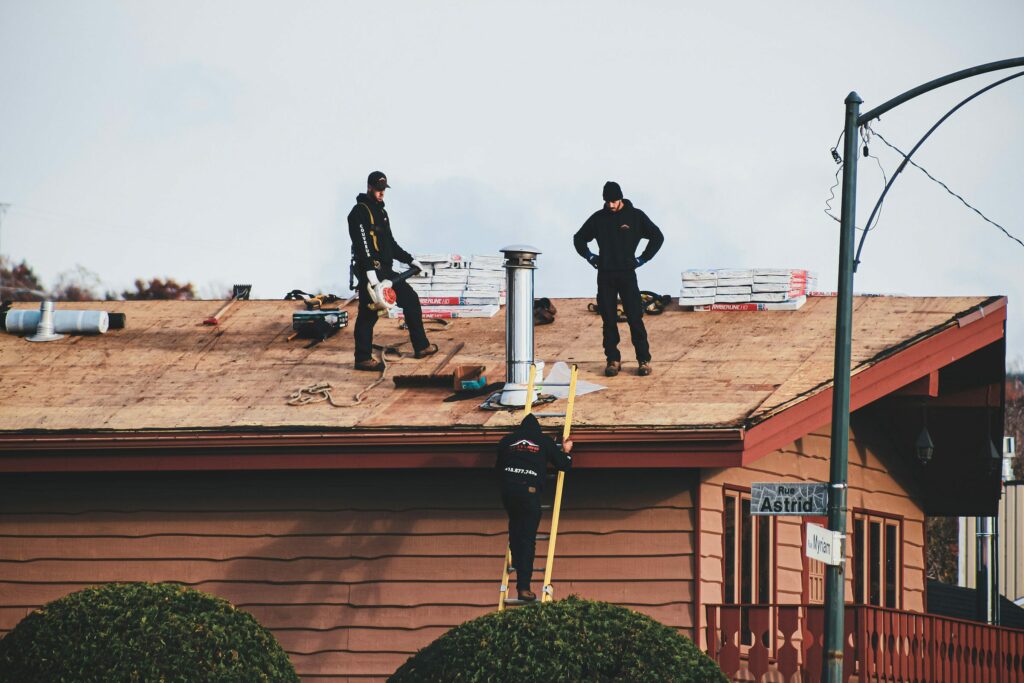
The Craftsman bungalow is the signature Longfellow house: a low, broad roof with wide overhanging eaves, often a front or side gable, frequently a shed or gable dormer, and sometimes exposed rafter tails and brackets under the eaves. It is a handsome design, and it creates a few predictable roofing issues.
Finished upper floors and ice dams
Many bungalows have a finished upper story tucked under the roof, with sloped ceilings and short knee walls. There is very little space for insulation and airflow between those rooms and the roof deck. Warm air escapes into the roof, melts snow, and the water refreezes at the cold overhangs. The deep eaves that give a bungalow its look give ice a long, cold edge to build on.
Dormers and valleys
Every dormer adds valleys and step flashing where its walls meet the main roof. Shed dormers with low slopes can be especially leak-prone if they were roofed with shingles at a pitch too low for them.
Overhangs and rafter tails
Exposed rafter tails and wide soffits are part of the character, but they are also exposed to weather. Rot at the rafter ends or fascia is common on century-old homes and is best fixed while the roof is open.
Chimneys
Brick chimneys on these homes may need new flashing, a new cap or masonry repair. A roof replacement is the ideal time to deal with all three.
Ready to Talk About Your Longfellow Roof?
Tell us about your bungalow, cottage or building, and we will help you arrange the right repair or replacement. Call (888) 657-0348.
Historic Areas
The Milwaukee Avenue Historic District and Other Historic Properties
Seward is home to the Milwaukee Avenue Historic District, two blocks of small houses built between 1884 and 1890 by real estate speculator William Ragan. They have brick veneer over timber frames, uniform roof slopes and open front porches on narrow lots, giving the street an almost rowhouse feel. Residents fought off demolition plans in the 1970s, the district was added to the National Register of Historic Places in 1974, the remaining houses were rehabilitated, and new townhomes were built in a matching style.
On a street like this, a new roof is part of a shared streetscape. If your property is a designated landmark or within a local historic district, roofing material changes may need review by the city’s heritage preservation staff before work begins. Check the property’s status with the City of Minneapolis before you plan a project, and ask any contractor to build review time into the schedule.
The Minnehaha Park area in the Hiawatha neighborhood is also a designated historic district, though it is parkland rather than homes. Even outside designated areas, many Longfellow owners want a new roof that suits a 1920s house, such as a color and profile that complement the trim and siding.
River and Parks
Living Near the River Gorge and Minnehaha Falls

Longfellow’s eastern edge is the Mississippi River gorge, more than 80 feet deep, with the Winchell Trail along the bluff and Minnehaha Falls at the south end. The parkland brings large trees close to many homes.
- Trees and debris. Leaves and seeds fill gutters and valleys, and shaded slopes dry slowly, which favors moss and wear. Clean gutters before winter so meltwater can drain instead of feeding ice dams.
- Storm damage. Branches over the roof can scrape or puncture shingles in high wind. Trim limbs back from the roof where you can.
- Exposure. Homes facing open parkland or the river corridor can catch more wind than those mid-block. After a storm, check the most exposed slope for lifted or missing shingles.
If a storm leaves a hole in the roof or a limb on the house, temporary protection comes first. Our emergency roof repair page explains what to do and how tarping limits interior damage until permanent repairs are made.
Services
Roofing Services We Arrange in Longfellow
We help Longfellow homeowners, landlords and business owners arrange:
- Roof repair for dormer and valley leaks, chimney flashing, missing shingles and storm damage.
- Roof replacement on bungalows and older homes, including tear-off, board-deck repair, ice dam protection, ventilation improvements and new shingles.
- Roof inspections before buying or selling a century-old home, or after a hailstorm.
- Low-slope and flat roofs on porches, garages and rear additions.
- Commercial and mixed-use roofing for buildings along Lake Street, Franklin Avenue, 42nd Avenue and the Minnehaha Mile, many of which have flat roofs behind parapets.
If you are weighing a repair against a replacement, an inspection that looks at the deck, flashing and attic together gives you the clearest answer.
Before You Replace
Questions to Ask South Minneapolis Roofers About a Bungalow
- How will you handle the board deck? Ask how damaged boards will be replaced and how gaps will be addressed under the new underlayment.
- What is your plan for ice dams? Ask what goes at the eaves and valleys, and whether ventilation or insulation behind the knee walls can be improved.
- How will you flash the dormers and chimney? New step flashing and counterflashing should be part of the job, not reused pieces.
- Is the dormer pitch suitable for shingles? If not, ask about a low-slope membrane for that section.
- What repairs do you expect at the eaves? Ask how rotted fascia or rafter tails will be handled and priced.
- Who pulls the permit? Confirm requirements with the city before work begins.
Nearby Minneapolis communities
We also arrange roofing work in neighboring parts of the city, including Phillips Roofing, Powderhorn Roofing, Nokomis Roofing, University Area Roofing. See every community we cover on our Minneapolis roofing service area page.
Common Questions
Frequently Asked Questions
Answers to common roofing questions from homeowners and property owners in Longfellow.
Which neighborhoods are in the Longfellow community?
The Longfellow community includes Cooper, Hiawatha, Howe, Longfellow and Seward.
Why do bungalows in Longfellow get ice dams?
Many bungalows have finished upper rooms tucked under the roof, leaving little space for insulation and ventilation. Heat escapes into the roof and melts snow, which refreezes at the wide, cold eaves.
Should I tear off my old roof or add a layer?
On a century-old home, a full tear-off is usually better. It removes extra weight and lets the crew inspect and repair the original board deck before the new roof goes on.
Is my house a Sears catalog home, and does it matter for roofing?
Some Longfellow homes were built from ready-to-assemble kits such as Sears catalog homes. Roofing needs are similar to other homes of the era; what matters most is the condition of the deck, flashing and ventilation.
Do I need approval to change the roof on a home in the Milwaukee Avenue Historic District?
If your property is a designated landmark or in a local historic district, a material change may require review by the city’s heritage preservation staff. Check your property’s status with the City of Minneapolis first.
How do I get a free estimate?
Call (888) 657-0348 or request a free estimate online, and we respond within 24–48 hours.
Plan Your Longfellow Roofing Project
From Seward to Hiawatha, Minneapolis Roofing Company can help you arrange a roof repair, inspection or replacement that fits your home. Call (888) 657-0348 or request a free estimate. We respond within 24–48 hours.