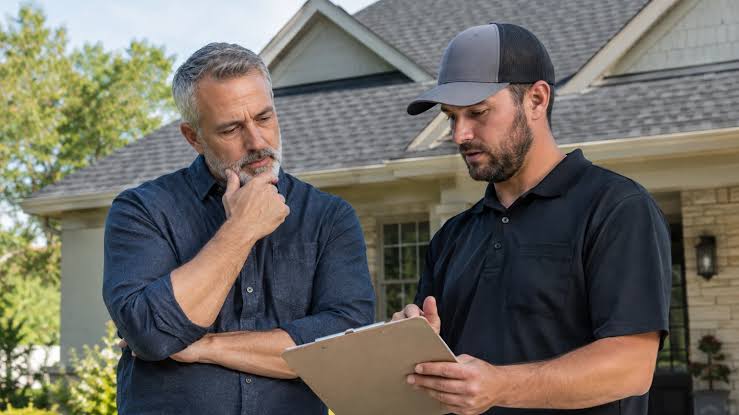
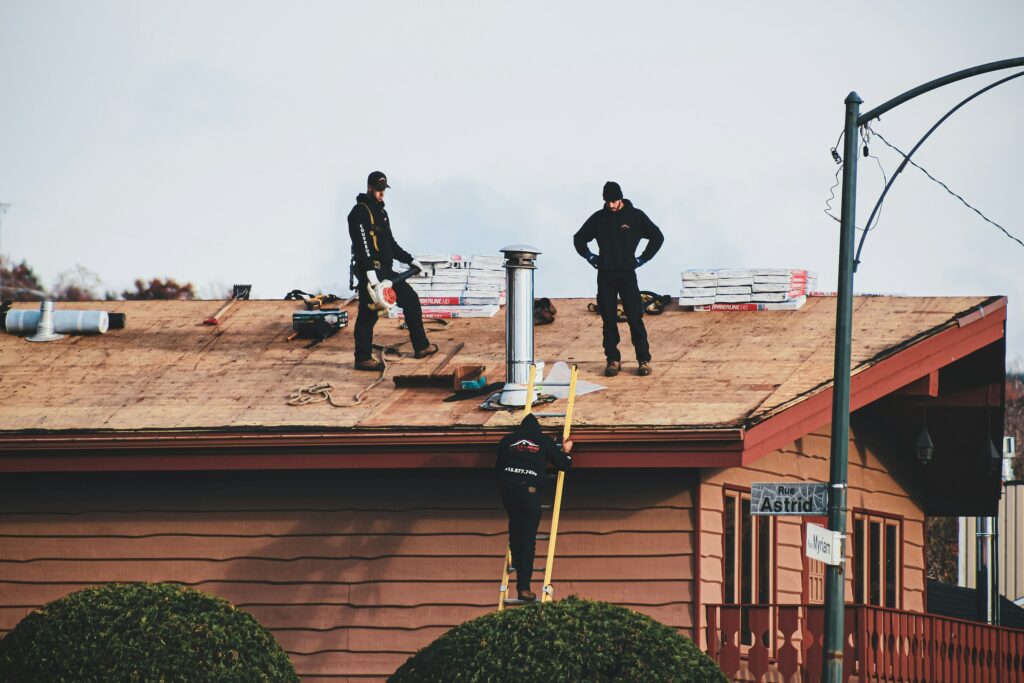
Yes, you can replace a roof in winter in Minnesota. Asphalt shingles can be installed in cold weather as long as the crew follows the shingle manufacturer’s cold-weather instructions: keeping bundles warm, handling them gently, hand-sealing shingles that won’t self-seal, and working only on a deck that is clear of snow, ice, and frost.
What changes in winter is not whether the job can be done, but how carefully it has to be done. Cold shingles crack more easily, the adhesive strip that bonds each course may not activate until spring, and short daylight hours limit how much roof can be opened and closed in a day. This guide explains what manufacturers actually require, how a good crew handles a Minnesota winter, and how to decide whether to go ahead now or wait for warmer weather.
In this article
- Can you replace a roof in winter? The short answer
- Why cold weather is hard on asphalt shingles
- What shingle manufacturers say about cold weather shingle installation
- How a proper winter roof installation is done
- Ice barrier and underlayment in a Minnesota winter
- Metal and flat roofs in winter
- When winter replacement makes sense, and when to wait
- Pros and cons of a winter roof replacement
- Questions to ask before a winter roof replacement
- What to expect after a winter install
- Frequently Asked Questions
Can you replace a roof in winter? The short answer
Roof replacement is a year-round trade in Minnesota. Major shingle makers publish specific cold-weather installation guidance precisely because roofs get replaced in cold climates all winter long. GAF, for example, states that there is no practical lower temperature limit for installing its shingles as long as the right precautions are taken, though it notes shingles are easiest to handle above 40°F.
That said, “can be done” is not the same as “should be done on any given day.” In the Twin Cities, the normal average January temperature at the Minneapolis–St. Paul airport is about 16°F, according to National Weather Service climate data. On the coldest days, during heavy snow, or when wind is strong, a responsible crew will pause rather than push through.
Most winter replacements fall into one of three groups:
- Urgent jobs: a roof that is actively leaking, failing, or was damaged by a storm and can’t safely wait months.
- Planned jobs during a mild stretch: early winter or late winter days in the 30s and 40s when conditions are workable.
- Time-sensitive jobs: a home sale, an insurance claim deadline, or a renovation schedule that needs the roof finished.
Why cold weather is hard on asphalt shingles
Asphalt shingles are made from a fiberglass mat coated with asphalt and topped with mineral granules. Asphalt softens when warm and stiffens when cold, and that one fact drives nearly every winter precaution.
Shingles get brittle
GAF notes that below 40°F asphalt shingles lose flexibility and may crack. IKO’s cold-weather bulletin puts the line a bit higher, saying shingles become more brittle at 50°F and below. A brittle shingle can crack when it is bent over a ridge, folded into a valley, dropped off a ladder, or nailed while it isn’t lying flat. Cold bundles can also take on the shape of whatever they were stacked on and won’t lie flat on the deck.
The self-sealing strip may not activate
Every modern shingle has a factory-applied strip of heat-activated sealant. Once the sun warms the roof, that strip bonds each shingle to the one below and gives the roof most of its wind resistance. Owens Corning says its sealant needs direct sun to activate, and GAF says its adhesive strip needs temperatures above 40°F. The Asphalt Roofing Manufacturers Association (ARMA) adds that sealing time depends on roof slope, orientation, and exposure to sun and heat.
In practice, shingles installed in December may sit unsealed until a few warm, sunny days arrive. IKO notes that sealing can take up to several weeks depending on conditions. Until they seal, the shingles depend on their nails and any hand-applied cement to resist wind.
Nails and nail guns behave differently
Air compressors lose pressure in the cold and pressure changes as the day warms up. GAF and Owens Corning both warn that this leads to under-driven nails, which can puncture the shingle above, or over-driven nails, which can cut through the shingle. Crews need to check and adjust nailer pressure throughout the day.
Frost and ice make the deck unsafe and unsuitable
ARMA recommends waiting until a sloped roof is free of ice and frost before working on it, noting that frost can be almost invisible and very hazardous. Moisture trapped under underlayment is also a problem for the deck and for underlayment adhesion.
What shingle manufacturers say about cold weather shingle installation
Always follow the installation instructions for the exact shingle going on your house. Here is a summary of what several major manufacturers publish about cold weather shingle installation:
| Manufacturer | Cold-weather threshold | Key published steps |
|---|---|---|
| GAF | Shingles lose flexibility below 40°F; recommends installing at 40°F or warmer, with precautions if colder | Store shingles at about 70°F for at least 24 hours before use; bring them up in small batches; hand-seal with quarter-sized dabs of approved asphalt cement; nail in the common bond area; check compressor pressure often |
| Owens Corning | Extra care at or below 40°F air and surface temperature | Hand-seal around the entire roof perimeter; for laminate shingles, four 1-inch dabs of ASTM D4586 roof cement about 1 inch from the leading edge; for three-tab shingles, two dabs under each tab; leave no more than a 1/16-inch gap at end joints |
| CertainTeed | Shingles stiffen and adhesive may not activate below about 40°F (4°C) | Warm shingles before use; work in the warmest part of the day; hand-seal each tab next to the factory adhesive; hand-seal hip and ridge caps; use a six-nail pattern in cold weather |
| IKO | Shingles become more brittle at 50°F and below | Never bend, drop, or throw cold bundles; keep shingles flat so nails don’t break the surface; if shingles may not seal before winter, hand-seal with dabs about the size of a quarter |
A few points are common to all of them. Warm the shingles, handle them gently, keep them flat, and hand-seal when the factory strip can’t be counted on. Every manufacturer also warns against using too much roof cement, which can cause blistering or run onto the shingle face.
What hand-sealing is
Hand-sealing means placing small dabs of asphalt roof cement under each shingle so it is held down until the factory strip bonds. It adds labor, but it is the main way a winter roof gets wind resistance before spring. Ask whether your crew plans to hand-seal the whole roof or only the perimeter, ridge, and other high-wind areas, and confirm that the approach matches the manufacturer’s instructions for your shingle.
How a proper winter roof installation is done
A well-run winter roof installation looks a little different from a summer job. These are the practices to expect, drawn from manufacturer and ARMA guidance:
- Warm storage. Shingles, hip and ridge caps, and self-adhering underlayment are stored in a heated space before use, then brought onto the roof in small quantities so they don’t cool off before they are installed.
- Snow and ice removed section by section. Only the area that can be torn off, dried in, and covered that day is opened up. The deck must be dry and free of snow, frost, and ice.
- Same-day dry-in. With short winter daylight, crews plan the day so every opened section is covered with underlayment and shingles, or at least fully protected, before dark.
- Careful handling. Bundles are not thrown or dropped, and shingles are laid flat before nailing.
- Warmed accessories. Hip and ridge shingles are the most likely to crack because they are bent over the peak, so they are kept warm until the moment they’re installed.
- Open metal valleys considered. ARMA suggests considering open metal valleys in cold weather because woven and closed-cut valleys require bending shingles.
- Nailer pressure checked through the day. Some crews hand-nail critical areas to avoid over-driven or under-driven fasteners.
- Hand-sealing. Shingles are hand-sealed according to the manufacturer’s instructions.
- Attic ventilation checked. ARMA recommends making sure the attic is adequately ventilated, which matters even more in a climate with long winters and ice dams.
A full replacement is a full replacement in any season. The old roof is torn off, the deck is inspected and repaired where needed, and new drip edge, ice barrier, underlayment, flashing, and shingles are installed. Learn more about the process on our roof replacement page.
Ice barrier and underlayment in a Minnesota winter
Ice barrier is the self-adhering membrane installed along the eaves to stop water backed up behind an ice dam from leaking into the house. Minnesota’s residential code marks ice barrier underlayment as required where there is a history of local damage from ice damming, which describes much of the Twin Cities housing stock.
Under the International Residential Code that Minnesota’s code is based on, the ice barrier must run from the lowest edge of the roof to at least 24 inches inside the exterior wall line of the house. On roofs with a slope of 8:12 or steeper, it must extend at least 36 inches up the slope from the eave. Your local building department has the final word on what applies to your home.
Cold makes self-adhering membranes harder to install
Self-adhering membranes rely on a sticky bitumen backing that grips poorly in the cold. GAF’s guidance for its StormGuard and WeatherWatch leak barriers shows how much care cold weather requires:
- The standard application range is 40°F to 120°F air temperature on a dry deck.
- Below 40°F, the membrane itself must be at least 45°F when it is applied.
- Rolls and adhesives should be stored overnight in a heated area of at least 55°F and taken out only as they are installed.
- Rolls are cut into shorter lengths of 10 to 20 feet and back-nailed along the top edge every 18 inches so they don’t slide before they bond.
- If the membrane or laps aren’t sticking, installation should stop.
Poorly applied membrane can wrinkle, leave unsealed laps that let water in, or shift underfoot. This is one of the clearest examples of why winter work should be done by an experienced crew, not rushed.
Metal and flat roofs in winter
Most Minnesota homes have asphalt shingles, but the winter question comes up for other roofs too.
Metal roofing
Metal panels are mechanically fastened, so they don’t depend on a heat-activated sealant strip the way shingles do. The underlayment, sealants, and tapes used with metal roofing still have temperature limits set by their manufacturers, and snow and ice on metal panels make the work surface extremely slippery. Winter metal installs are possible but follow the same rule: check the manufacturer’s limits and work only in safe conditions. Our guide on how metal roofing is installed covers the basic steps.
Flat and low-slope roofs
Membranes, adhesives, primers, and coatings used on flat roofs often have minimum application temperatures, and many won’t bond to a cold, damp surface. Some systems handle cold better than others. Flat roof replacement in winter is very product-specific, so the installer should confirm the chosen system’s cold-weather limits before scheduling.
When winter replacement makes sense, and when to wait
Good reasons to replace now
- The roof is actively leaking and patches are no longer holding.
- Storm damage has exposed the deck or torn off large areas of shingles. In that case the first step is protecting the house; see our emergency roof repair page.
- The deck or structure is compromised, such as soft or rotted sheathing that won’t survive another season of snow load.
- A deadline such as a home sale, a lender or insurer requirement, or a renovation that needs a finished roof.
Good reasons to wait for spring
- The roof is aging but still watertight, and the replacement is mostly preventive or cosmetic.
- A deep cold snap, a major snowstorm, or high winds are in the forecast.
- The roof has complex details, such as many valleys, dormers, or skylights, that require bending shingles and detailed flashing work that’s harder in the cold.
- You’d like to see the shingles seal and lie flat before the first heavy snow sits on them.
If the roof needs attention but not a full replacement, a targeted repair can often carry it to spring. A temporary patch done right is better than a full replacement done in poor conditions.
Pros and cons of a winter roof replacement
| Pros | Cons |
|---|---|
| Fixes an urgent leak or storm damage now instead of risking months of water damage | Shingles may not seal until warmer weather, so hand-sealing is needed |
| Contractor schedules may be more flexible outside peak season | Cold-weather precautions add labor and time |
| Interior repairs can start sooner once the roof is watertight | Short daylight hours limit how much roof can be done each day |
| Problems hidden under the old roof, such as rotted decking, are found and fixed before more snow load builds up | Weather delays are more likely, and self-adhering membranes are harder to install |
| Ice barrier and ventilation problems behind past ice dams can be corrected before the rest of winter | Shingles may look wavy or not lie perfectly flat until they warm up |
Questions to ask before a winter roof replacement
Before you sign for a winter roof replacement, ask the contractor these questions. Clear answers are a good sign the crew has done this before.
- Which shingle are you installing, and what do that manufacturer’s cold-weather instructions require?
- Where will shingles and underlayment be stored before they go on the roof, and how will they be kept warm?
- Will you hand-seal the whole roof or only certain areas? How many dabs per shingle, and with what cement?
- How will you handle snow, ice, and frost on the deck each morning?
- How much of the roof will be opened at a time, and how will the house be protected overnight?
- What is your plan if the weather turns mid-job?
- How will the ice barrier be installed in the cold, and how far up the roof will it extend?
- Will you pull the building permit, and when are inspections scheduled?
- Will you check attic ventilation and fix problems while the roof is open?
Always get the scope, materials, and schedule in a written estimate. Our roof installation page explains what a complete installation should include.
What to expect after a winter install
A roof installed in the cold may not look quite finished until spring. Malarkey’s cold-weather bulletin notes that shingles that aren’t lying flat may need anywhere from a couple of weeks to several months of warm, sunny weather to relax. Some slight waviness right after a winter install is normal.
A few habits help protect a new winter roof:
- Keep off the roof. Cold, hard shingles are easily damaged by foot traffic, and a snowy or icy roof is extremely dangerous. Never climb onto a roof in winter.
- Remove heavy snow from the ground only. If snow needs to come off, use a long-handled roof rake from the ground and avoid scraping the shingles. For larger roofs or heavy loads, hire a roof snow removal service.
- Watch after the first warm spell. Once temperatures rise and the sun hits the roof, the sealant strips should bond. From the ground, look for any shingles that are lifting or out of line and have the installer check them.
- Keep the paperwork. Save the invoice, permit records, and shingle and underlayment product names. They matter for any future warranty question.
Warranties and cold-weather installs
Manufacturer warranties cover the shingles, while workmanship coverage, if any, comes from the installer. GAF states that the air temperature at installation does not by itself affect its shingle limited warranty, but it excludes cracking and blow-offs that happen before the sealant activates. That is one more reason hand-sealing and careful handling matter. Read the actual warranty for your shingle and ask the installer what workmanship coverage, if any, they provide in writing.
Frequently Asked Questions
Can you put a new roof on in the winter in Minnesota?
Yes. Asphalt shingle roofs can be replaced in winter as long as the crew follows the shingle manufacturer’s cold-weather steps, such as warming the bundles, hand-sealing shingles, and keeping the deck free of snow, ice, and frost.
What temperature is too cold to install shingles?
Manufacturers don’t set a hard lower limit, but GAF and Owens Corning both treat 40°F as the point where extra precautions start, and IKO notes that shingles become more brittle at 50°F and below. Below those temperatures, shingles must be handled carefully and usually hand-sealed.
Will shingles seal if they are installed in winter?
The factory sealant strip needs warmth and sun to activate, so shingles laid in the cold may not bond until temperatures rise, sometimes not until spring. That is why manufacturers call for hand-sealing with asphalt roof cement when shingles may not seal on their own.
Does installing shingles in cold weather void the warranty?
According to GAF, the air temperature at installation does not by itself affect its shingle limited warranty, but cracking and blow-offs that happen before the sealant activates are excluded. Read the specific manufacturer’s warranty terms for your shingle.
Is it cheaper to replace a roof in winter?
Sometimes scheduling is easier in the off-season, but cold-weather precautions add labor and material, so there is no reliable rule that winter is cheaper. A written estimate for your specific roof is the only way to compare.
Can a roof be replaced while there is snow on it?
Snow has to be removed from the section being worked on, and the deck must be dry and free of ice and frost before underlayment goes down. Crews typically clear and tear off one manageable section at a time so the house is never left open.
Replacing a roof in winter in Minnesota is very doable when the crew respects the cold: warm materials, careful handling, hand-sealing, and only working on a clean, dry deck in safe conditions. If your roof can’t wait for spring, the right precautions make a winter installation a sound choice.
Not sure whether your roof should be replaced now or can hold until spring? Call Minneapolis Roofing Company at (888) 657-0348 for a free estimate.