
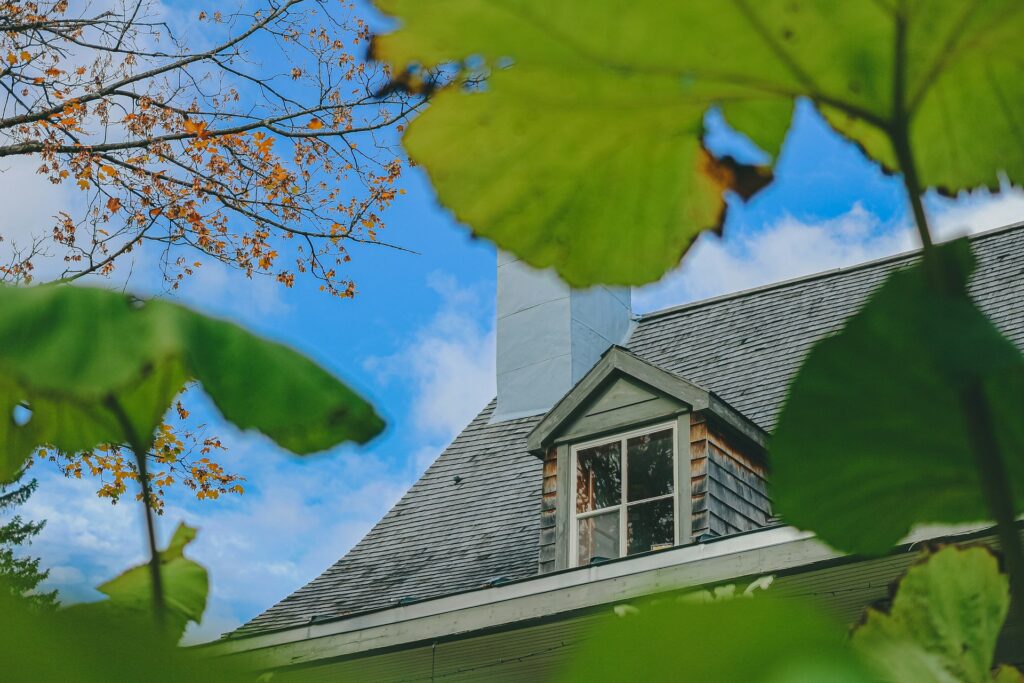
What is composite roofing? It’s a family of man-made roofing products, usually called synthetic slate, synthetic shake or composite tile, that are molded from polymers such as plastic resins or rubber to look like natural slate or cedar. Pieces are installed one by one, much like the real thing, but they weigh far less than stone and don’t rot, split or need treatment like wood.
Composite roofing is not the same as “composition” shingles, which is simply another name for ordinary asphalt shingles. Below, we cover what composite roofing is made of, how it handles hail and cold winters, its pros and cons, and how to decide whether it’s worth it for your home.
In this article
- What Composite Roofing Is Made Of
- Composite vs. Composition Shingles: Not the Same Thing
- Types of Composite Roofing
- How Composite Roofing Is Installed
- How Composite Roofing Performs in Cold Climates
- Is Composite Roofing Good for Hail?
- Fire and Wind Ratings
- Pros and Cons of Composite Roofing
- How Much Does Composite Roofing Cost?
- How Long Does Composite Roofing Last?
- Is Composite Roofing Right for Your Home?
- Frequently Asked Questions
What Composite Roofing Is Made Of
There’s no single recipe. Each manufacturer uses its own blend, which is one reason performance and warranties vary so much from brand to brand. Common formulas include:
- Virgin plastic resins with additives. DaVinci, for example, describes its tiles as a composite of virgin resins with UV and thermal stabilizers and a fire retardant.
- Recycled plastics. Brava describes its tiles as compressed recycled plastics combined with other materials.
- Rubber and plastic blends. EcoStar’s Majestic Slate is made from EPDM rubber and TPO plastic, the same families of materials used in some flat-roof membranes.
The additives matter as much as the base polymer. UV stabilizers help the color and surface hold up to sunlight, and fire retardants help the product earn a fire rating. Some lines also offer an extra factory finish; DaVinci, for instance, sells an optional Kynar-based coating.
The tiles are molded from real slate or cedar shakes, so they carry the texture, edges and grain of the material they imitate. Many lines come in multiple widths and color blends so the finished roof doesn’t look repetitive.
Composite vs. Composition Shingles: Not the Same Thing
The names cause a lot of confusion. “Composition shingle” is just another term for an asphalt shingle. InterNACHI, the home inspector association, describes “asphalt” and “composition” shingles as general terms for the same thing: a fiberglass mat embedded in asphalt, with mineral granules on the weather-facing surface.
Composite roofing is a different product entirely.
| Composite (synthetic) roofing | Composition (asphalt) shingles | |
|---|---|---|
| Main materials | Plastic resins and/or rubber with UV stabilizers and fire retardants | Fiberglass mat, asphalt and mineral granules |
| Look | Imitates slate, cedar shake or clay tile | Three-tab or dimensional (architectural) shingle look |
| Format | Individual tiles, installed one at a time | Strips or laminated shingles covering more area per piece |
| Typical use | Higher-end homes and replacements for slate or cedar | The most common roof covering on homes |
| Installer pool | Smaller; requires experience with the specific product | Very large |
If a quote says “comp roof” or “composition,” it almost certainly means asphalt shingles. Ask for the exact product name if you’re unsure.
Types of Composite Roofing
Synthetic slate
Synthetic slate is the most popular style. It mimics the flat, layered look of natural slate in grays, blacks, greens and purples. Natural slate is heavy and labor-intensive to install, and composite slate is far lighter. Manufacturers such as Brava state that their slate does not need added structural support, which is often a deciding factor on homes whose framing wasn’t designed for stone.
Synthetic shake
Synthetic shake imitates hand-split or sawn cedar shakes. It’s often chosen to replace a worn cedar roof without the issues that come with wood, such as curling, splitting, rot and insects, and without regular treatments.
Synthetic tile
Some manufacturers also make composite versions of clay barrel tile (the curved Spanish style). These are less common in the Upper Midwest but follow the same idea: the look of a heavy material at a fraction of the weight.
How Composite Roofing Is Installed
Composite tiles are nailed to a solid roof deck over underlayment, one piece at a time, with overlapping courses like slate or shakes. The details are set by each manufacturer, and following the installation guide is what keeps the product’s warranty valid.
A look at one manufacturer’s synthetic slate guide (Westlake Royal’s Province line) shows the kind of rules involved:
- Minimum slope. That product can’t go on roofs flatter than 3:12, and roofs between 3:12 and 4:12 need a self-adhered membrane over the entire deck.
- Ice protection at the eaves. The guide calls for self-adhered membrane extending two feet above the exterior wall line in areas where the average January temperature is 25°F or lower, or where ice buildup is possible.
- Expansion gaps. Polymer tiles expand and contract with temperature, so they must not be butted tightly. Starter tiles in that guide are spaced 3/8 to 1/2 inch apart.
- Fastening. At least two nails per tile, with more required in high-wind areas or by code.
Other products will have different numbers, so treat these as examples, not universal rules. Local building codes also apply, including permit requirements for re-roofing.
Because tiles go on individually, installation generally takes longer than a standard asphalt shingle roof. Flashing details at valleys, walls and chimneys also matter more on a premium roof, so experience with the specific brand is worth asking about. For a broader look at what a new roof involves, see our roof installation page.
How Composite Roofing Performs in Cold Climates
Cold-weather performance is a fair question for any plastic-based product. Here’s what manufacturers document and what to check.
Installation in cold weather
DaVinci says its composite slate and shake can usually be installed in temperatures as low as 20°F, compared with the 40°F to 45°F minimum many other roofing products list. In cold weather, it calls for a minimum 3/16-inch gap between tiles and warns that tiles warped in storage should be allowed to acclimate and flatten before they go on.
Expansion and contraction
Temperature swings make polymer tiles grow and shrink. The required spacing between tiles exists for this reason, and skipping it can cause buckling in summer or gaps in winter. This is an installation-quality issue more than a material flaw, which is why the installer’s familiarity with the product matters.
Brittleness
Not all synthetics are equal in the cold. Brava, a manufacturer, notes that some competing plastic shingles become brittle in freezing climates. Before choosing a product, ask for its cold-weather performance data and look at how long it has been installed in climates like yours.
Ice dams
No roof covering prevents ice dams on its own, because they’re caused by attic heat loss. That’s why the ice-barrier membrane at the eaves matters on composite roofs just as it does on asphalt.
Is Composite Roofing Good for Hail?
Many composite slate and shake products carry a Class 4 impact rating, the highest class under the UL 2218 test. DaVinci, Brava and EcoStar all list Class 4 ratings for their composite lines.
In the UL 2218 test, a 2-inch steel ball is dropped from 20 feet onto multiple spots on a test roof. To earn Class 4, the product can show cosmetic dents but no cracks through to the back surface.
Keep the rating in perspective:
- Class 4 is a lab benchmark, not a promise that a roof can’t be damaged by hail. Real hail varies in size, density and angle, and older roofs may not perform like new test samples.
- Check the rating for the exact product you’re buying. Not every composite product is Class 4.
- Some homeowners may qualify for insurance savings with an impact-rated roof. Ask your insurance company whether it offers any and what documentation it needs before you choose a product.
If your current roof has already taken a beating, our hail damage roof repair page explains how damage is assessed.
Fire and Wind Ratings
Fire ratings depend on the product and the system underneath it. Brava lists its tiles at Class A or Class C depending on the product, and the Province installation guide shows that the fire class depends on which underlayment is used. Class A is the highest fire rating, so if it matters to you (or to your insurer or local code), confirm the full assembly that achieves it.
Wind ratings also vary by brand and fastening method. Manufacturers publish wind ratings tied to specific nail types and fastener counts, so the installation method has to match the rating you’re relying on.
Pros and Cons of Composite Roofing
Pros
- Slate or cedar look without the weight. Much lighter than natural slate, which can avoid structural upgrades.
- Impact resistance. Many products carry a Class 4 rating.
- No rot, splitting or insect damage. A key advantage over wood shakes.
- Low maintenance. No sealing, staining or treatments.
- Recycled content and recyclability. Some products use recycled materials, and some manufacturers say their tiles are recyclable.
- Long warranties. Manufacturers offer long limited warranties, such as 50-year or lifetime limited material warranties.
Cons
- Higher cost than asphalt. It’s a premium product with more labor per square.
- Fewer experienced installers. Product-specific installation rules mean experience matters.
- Brand-to-brand variation. Formulas differ, so cold-weather, fade and fire performance aren’t interchangeable.
- Shorter real-world history than slate. Natural slate and cedar have centuries of field history; synthetics have decades.
- Matching repairs later. If a product line or color is discontinued, finding matching replacement tiles can be harder than with common asphalt shingles.
- Not a fix for attic problems. Ice dams and ventilation issues still need to be solved separately.
How Much Does Composite Roofing Cost?
We don’t quote a per-square price here because costs swing widely by brand, profile, roof complexity, tear-off and region, and published figures go out of date quickly. What’s consistent is that composite roofing costs more than standard asphalt shingles, both for materials and for the slower, piece-by-piece installation.
The factors that move the price most:
- Product line and profile. Thicker, more detailed tiles and premium finishes cost more.
- Roof complexity. Valleys, dormers, chimneys and steep pitches add labor and flashing.
- Tear-off and deck repairs. Removing an old roof and replacing damaged decking adds cost.
- Underlayment requirements. Some slopes and fire ratings require full-deck membranes.
- Accessories. Matching hip, ridge and starter pieces are usually product-specific.
The only reliable number is a written estimate for your roof. Get more than one, and make sure each one names the exact product and underlayment. Our roof replacement cost guide explains the general factors behind any replacement price.
How Long Does Composite Roofing Last?
Manufacturers back many composite products with long limited warranties, for example a 50-year limited warranty (Brava), a lifetime limited material warranty (DaVinci), or a 50-year warranty that EcoStar lists as available. A warranty term isn’t the same as a measured lifespan, though, and independent long-term field data is still limited compared with slate or asphalt.
When comparing warranties, read the fine print:
- What’s covered: material defects only, or labor too?
- Whether coverage decreases over time
- Whether it transfers to a new owner if you sell
- Installation requirements, such as approved underlayment and fasteners
- Whether the wind and hail coverage has separate limits
Workmanship coverage, which addresses installation errors, comes from the installer rather than the manufacturer, so ask about it separately.
Is Composite Roofing Right for Your Home?
Composite roofing tends to make the most sense when:
- You want a slate or cedar look but your framing, budget or maintenance tolerance rules out the real thing.
- You’re replacing a worn cedar or slate roof and want to keep the home’s character.
- Hail resistance is a priority and the product you choose carries a Class 4 rating.
- You plan to stay in the home long enough to benefit from a long-lasting roof.
It may not be the best fit when budget is the top priority, when the roof is too low-slope for the product, or when no experienced installer is available for the brand you want. A quality architectural asphalt shingle, including impact-rated versions, is often the practical alternative.
Frequently Asked Questions
Is composite roofing the same as asphalt shingles?
No. Composition shingles are asphalt shingles, but composite roofing is synthetic slate, shake or tile made from plastic resins or rubber. They are different materials with different looks, costs and installation methods.
What is synthetic slate made of?
It depends on the brand. Common formulas include virgin plastic resins with UV stabilizers and fire retardants, compressed recycled plastics, or blends of EPDM rubber and TPO plastic.
Is composite roofing hail resistant?
Many composite slate and shake products carry a Class 4 rating under UL 2218, the highest impact class. That is a lab benchmark rather than a promise of no damage, so confirm the rating for the specific product.
Can composite roofing handle cold winters?
Leading products are designed for cold climates and some can be installed as low as 20°F. Proper spacing for expansion and an ice barrier at the eaves are essential, and some manufacturers note that not all plastic shingles stay flexible in freezing weather.
Is composite roofing more expensive than asphalt?
Yes. Composite roofing is a premium product with higher material costs and slower, tile-by-tile installation, so it costs more than standard asphalt shingles. A written estimate for your roof is the only way to know the actual price.
Is composite roofing lighter than real slate?
Yes, much lighter. Manufacturers state that composite slate generally doesn’t need the added structural support that natural slate often requires.
Composite roofing gives you the look of slate or cedar with less weight, little maintenance and, for many products, top-tier impact ratings, at a higher price than asphalt. Compare specific products rather than the category as a whole, and choose an installer who knows the brand.
If you’re weighing materials for a new roof, our roof replacement page walks through what to expect from the project.