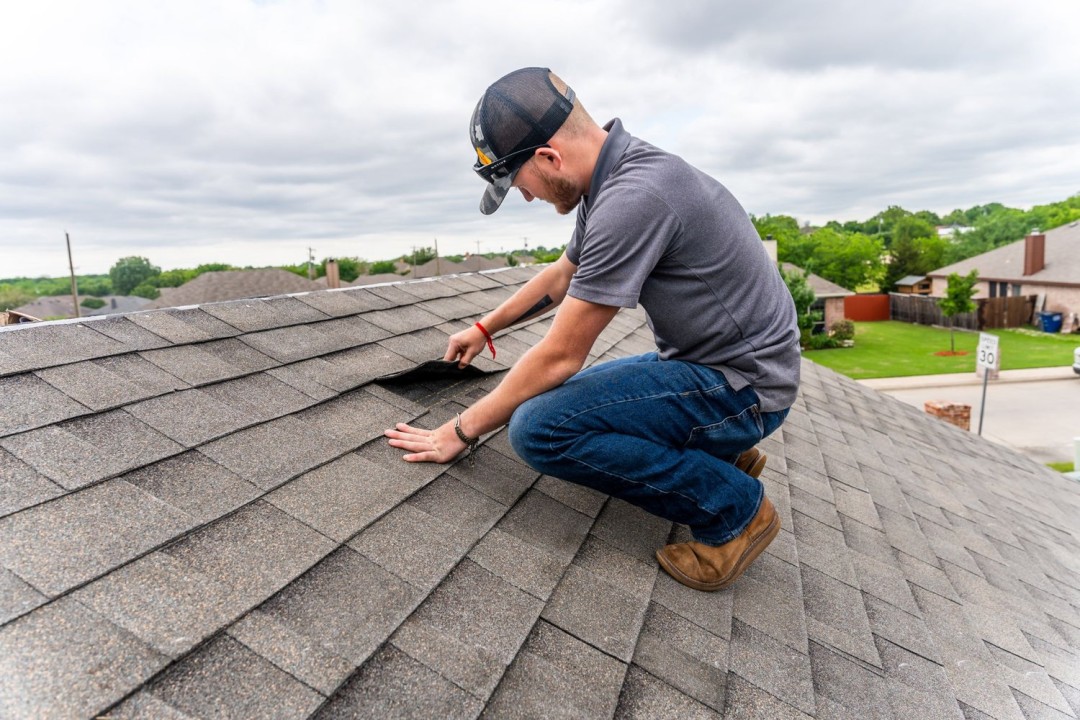
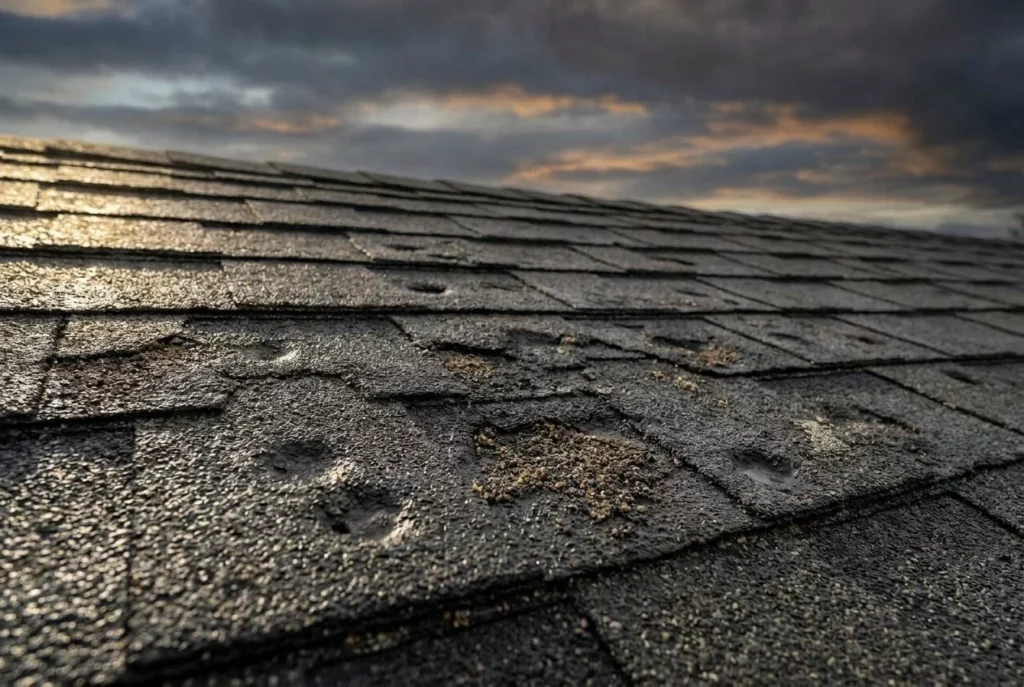
Does homeowners insurance cover roof replacement? Yes, but only when a covered event, such as hail, wind, a falling tree or fire, damages the roof badly enough that repair isn’t a reasonable fix. Insurance does not pay to replace a roof simply because it’s old, worn out or poorly maintained. Those are exclusions in nearly every standard policy.
Even when the damage is covered, how much you receive depends on your policy’s fine print: whether the roof is valued at actual cash value or replacement cost, the size of your wind and hail deductible, and any exclusions for cosmetic damage. This guide explains what’s covered, what isn’t, how old roofs are treated and how Minnesota homeowners can make sure a legitimate claim is paid in full.
In this article
- The Short Answer: When Insurance Pays for a New Roof
- What’s Usually Covered and What Isn’t
- Will Insurance Replace an Old Roof?
- Actual Cash Value vs Replacement Cost (ACV vs RCV)
- Wear and Tear and Maintenance Exclusions
- Cosmetic Damage Exclusions and Wind/Hail Limits
- How Your Deductible Affects a Roof Claim
- Partial Roof Damage and Matching
- How to Get Insurance to Pay for Roof Replacement (Legitimately)
- If You’re Paying Out of Pocket
- Frequently Asked Questions
The Short Answer: When Insurance Pays for a New Roof
The common HO-3 homeowners policy covers the house itself on an “all-risk” (open perils) basis, meaning damage is covered unless the policy specifically excludes it. The Minnesota Department of Commerce notes that the listed exceptions almost always include flood, earthquake, war and nuclear hazard. The Insurance Information Institute lists windstorm and hail among the perils a standard HO-3 policy covers, and it notes that coverage does not extend to routine wear and tear or poor maintenance.
In practice, insurance usually pays for a full roof replacement when three things are true:
- The cause is sudden and accidental, like a hailstorm, a windstorm, a tree limb or a fire.
- The damage is widespread enough that repairing individual shingles or sections isn’t practical.
- No exclusion applies, such as a cosmetic damage exclusion or a limit on older roofs.
If only part of the roof is damaged, the insurer may pay to repair that portion rather than replace the whole roof. Minnesota’s replacement cost statute says that for a partial loss, coverage applies only to the damaged portion of the property.
What’s Usually Covered and What Isn’t
| Cause of roof damage | Usually covered? | Notes |
|---|---|---|
| Hail | Usually yes | Subject to the wind/hail deductible and any cosmetic damage exclusion |
| Wind (torn or missing shingles) | Usually yes | Some policies now cover wind and hail only when shingles are punctured or torn |
| Fallen tree or limb | Usually yes | Damage the impact causes to the roof; check your policy for debris-removal terms |
| Fire or lightning | Yes | A core covered peril in standard policies |
| Weight of snow or ice | Depends on policy | Read how your policy treats collapse and snow or ice weight |
| Ice dam leaks | Depends on policy | Interior water damage and the underlying attic problem may be treated differently; ask your agent |
| Age, wear and tear | No | Excluded in standard policies |
| Poor maintenance or neglect | No | Clogged gutters, ignored leaks and rot are the owner’s responsibility |
| Faulty installation or manufacturing defects | Usually no | May fall under a contractor’s workmanship or manufacturer’s warranty instead |
| Cosmetic dents with no loss of function | Depends on policy | Excluded if your policy has a cosmetic damage exclusion |
| Flood | No | Requires separate flood insurance |
This table describes typical policies. Your own policy controls, so read the declarations page, the coverage form and every endorsement before you assume anything is or isn’t covered.
Will Insurance Replace an Old Roof?
Age by itself is never a covered cause of loss, so insurance won’t replace a roof just because it has reached the end of its life. But an old roof that’s damaged by hail or wind can still be covered. The questions are how much the insurer will pay and whether your policy has special terms for older roofs.
Why older roofs often get smaller payouts
The Minnesota Department of Commerce defines depreciation as the reduction in value caused by age, wear and tear, or condition. An older roof has more depreciation, so if your policy pays actual cash value for the roof, the check shrinks as the roof ages. A 20-year-old shingle roof destroyed by hail may be worth only a fraction of the cost of a new one on an actual cash value basis.
Policies and endorsements that limit older roofs
Some insurers now limit roof coverage based on age or material through endorsements. Common versions pay older roofs at actual cash value even on a replacement cost policy, or reduce the payout by a set percentage tied to the roof’s age. These go by different names from company to company, so look for any endorsement that mentions the roof, “roof surfacing” or a payment schedule. Minnesota Commerce notes that changes to coverage amounts and exclusions often happen at renewal, so read your renewal paperwork rather than assuming last year’s terms still apply.
Commerce also explains that HO-8 policies, which pay actual cash value rather than replacement cost, are often sold for older homes. If you have one of these, expect depreciation to be deducted.
When an old roof is likely to be denied
An adjuster may deny or limit a claim if the damage they see is consistent with age: curling, cracking across the whole roof, general granule loss or leaks from deteriorated flashing. IBHS lists several conditions that are commonly mistaken for hail damage, including uniform wear, manufacturing defects and installation or tool marks. If your roof was failing before the storm, the storm may not change the outcome.
Actual Cash Value vs Replacement Cost (ACV vs RCV)
The single biggest factor in how much insurance pays for a new roof is whether your roof is covered at actual cash value (ACV) or replacement cost value (RCV).
- Actual cash value pays the value of the damaged property after depreciation is deducted.
- Replacement cost value pays the cost to repair or replace the damaged property without deducting depreciation.
Those definitions come from the Minnesota Department of Commerce. Your deductible is subtracted in either case.
A simple example
The numbers below are made up only to show how the math works. Your actual estimate, depreciation and deductible will differ.
| ACV policy | RCV policy | |
|---|---|---|
| Cost to replace roof (insurer’s estimate) | $20,000 | $20,000 |
| Depreciation (example) | -$10,000 | -$10,000 held back at first |
| Deductible (example) | -$2,000 | -$2,000 |
| First payment | $8,000 | $8,000 |
| Paid after the work is done | $0 | $10,000 (recoverable depreciation) |
| Total from insurance | $8,000 | $18,000 |
How replacement cost claims are usually paid
Many replacement cost policies pay in two steps. The insurer first pays the actual cash value, minus your deductible. Once the roof is replaced, it pays the withheld depreciation, often called recoverable depreciation. The Nebraska Department of Insurance describes this process and notes that the repairs usually must be completed within a set period, commonly 180 days, though your policy sets the actual deadline. Check your policy’s deadline and send the final invoice promptly so you don’t leave money on the table.
Code upgrades in Minnesota
Minnesota law adds an important protection here. Under Minn. Stat. 65A.10, when an insurer offers replacement cost coverage, it must include the cost of repairing or replacing damaged property in accordance with the minimum code required by state or local authorities, subject to your policy limits. That matters for roofs because current code can require items the old roof didn’t have. In Minneapolis, for example, the city’s roofing handout requires an ice barrier from the eave to at least 24 inches inside the exterior wall line. Make sure any code-required items show up on the insurer’s estimate.
Wear and Tear and Maintenance Exclusions
Wear and tear exclusions come up in roof claims all the time. Shingles naturally lose granules, dry out, curl and crack over time. None of that is a sudden, accidental loss, so it isn’t covered.
Maintenance problems are treated the same way. Rot from long-term leaks, damage from clogged gutters, and deterioration you could have spotted and fixed are generally your responsibility. The Insurance Information Institute notes that standard policies exclude poor maintenance.
This is where good records help you. Photos of your roof in good condition before a storm, receipts for past repairs and a recent inspection report make it much easier to show that new damage came from a specific event and not from age. A professional roof inspection every year or two gives you exactly that kind of baseline.
Cosmetic Damage Exclusions and Wind/Hail Limits
A cosmetic damage exclusion removes coverage for damage that changes how the roof looks but doesn’t affect its ability to keep water out. It most often applies to dents in metal roofing, gutters and vents after hail.
In Minnesota, the Department of Commerce has stated that state law does not address policy exclusions for cosmetic damage from hail or wind. In other words, whether these exclusions apply comes down to your policy language. Commerce has also warned that some carriers use wording that eliminates coverage for wind and hail damage except when siding or shingles are punctured or torn. Under language like that, bruised shingles or dented metal that still sheds water may not be covered.
These exclusions are often added at renewal or offered in exchange for a lower premium. If you’re comparing policies, ask your agent directly whether the policy has a cosmetic damage exclusion or a “functional damage” requirement for the roof.
How Your Deductible Affects a Roof Claim
Your deductible is the amount you pay before coverage begins. Some Minnesota policies now have a separate, higher deductible for wind and hail. According to the Minnesota Department of Commerce, that deductible can be a flat amount or 1 percent or more of the home’s replacement value.
A percentage deductible is based on your dwelling coverage amount, not the size of the claim. On a home with $400,000 of dwelling coverage, for example, a 1 percent deductible is $4,000, and a 2 percent deductible is $8,000. If the roof damage is close to that number, filing may not make financial sense.
Your deductible is also one place Minnesota law draws a firm line. Under Minn. Stat. 325E.66, a residential contractor working on an insurance-funded job may not advertise or promise to pay your deductible, or offer a rebate or other compensation for an inspection, for filing a claim or for referrals. A roofer who offers to “cover” your deductible is breaking state law.
Partial Roof Damage and Matching
If hail or wind damages only one or two slopes, your insurer may pay to repair or replace just those areas. That can leave you with new shingles that don’t match the old ones, especially if your shingle color or style has been discontinued.
How insurers handle mismatched shingles depends on your policy and the specific facts. Minnesota Commerce lists undamaged property, siding or shingles among losses that may not be covered. If a repair would leave an obvious mismatch, document why: the original product isn’t available, the color has weathered, or the shingle sizes differ. Ask the adjuster to explain in writing how the policy treats undamaged areas, and get that answer before work starts.
How to Get Insurance to Pay for Roof Replacement (Legitimately)
There’s no trick to getting a roof claim approved. The goal is to make sure a real, covered loss is fully documented and fairly valued. These steps help.
Before a storm
- Read your policy now. Find your wind/hail deductible, whether the roof is ACV or RCV, and any roof or cosmetic endorsements. Ask your agent about anything unclear.
- Keep a roof file. Installation date, product information, invoices, inspection reports and dated photos of each slope.
- Maintain the roof. Fix small problems promptly so an adjuster can’t blame later damage on neglect.
After a storm
- Look for evidence from the ground. Minnesota’s hail season starts in late May in the south and early June in the north. After a storm, check gutters, downspouts, vents and A/C units for dents or spatter marks, and stay off the roof.
- Document before cleanup. Minnesota Commerce advises photographing damage before cleanup and keeping damaged items.
- Prevent further damage. Make reasonable temporary repairs, such as having a roof tarped, and keep the receipts. Policies generally expect you to protect the property.
- Report the claim promptly and get a complete copy of your policy if you don’t have one.
- Get a professional inspection. A roofer’s report helps you decide whether the damage is worth claiming. Commerce notes you don’t need to sign a contract just to get an estimate or to let a contractor talk with your insurer.
- Be present for the adjuster’s visit and point out all damage, including gutters, vents, siding and window screens.
When the estimate arrives
- Compare line by line. Check the measurements, the number of squares, tear-off, underlayment, ice barrier, flashing, vents, drip edge and permits against a contractor’s itemized estimate. Minnesota law requires an insurance-funded contractor to provide a good-faith itemized estimate.
- Don’t rush. Commerce advises against rushing into a settlement and says to be prepared to negotiate if the first offer doesn’t meet your expectations.
- Ask for denials in writing. Under Minn. Stat. 72A.201, a denial must cite the specific policy provision.
- Use appraisal if you disagree on the amount. Minnesota’s standard fire policy includes an appraisal clause in which each side picks an appraiser and the two choose an umpire.
- Consider a public adjuster for large or complex claims. They represent you, not the insurer, and are typically paid a percentage of the settlement. Verify their license through the Department of Commerce.
- Watch the deadlines. The standard fire policy in Minn. Stat. 65A.01 requires a lawsuit within two years after the loss, and replacement cost policies set their own deadline to complete repairs.
What not to do
- Don’t exaggerate damage or include old damage as new. That’s insurance fraud.
- Don’t sign a contract with a door-to-door contractor on the spot. Minnesota lets you cancel an insurance-funded roofing contract within 72 hours after your insurer notifies you the claim is denied, but it’s easier not to sign until you’ve decided.
- Don’t let a contractor negotiate coverage for you. Under 325E.66, a contractor may not interpret policy terms or adjust claims unless they hold a public adjuster license.
If your roof has storm damage, our hail damage roof repair page explains how damage is assessed and repaired.
If You’re Paying Out of Pocket
If your roof is simply worn out, or the damage is below your deductible, you’ll be paying for the replacement yourself. A few things can soften that:
- Plan ahead. Replacing a roof before it fails lets you schedule the work and compare estimates instead of reacting to a leak.
- Ask about premium discounts. Minnesota law requires insurers to offer a premium discount for homes that meet the IBHS FORTIFIED standard, including its hail supplement, and the state’s Strengthen Minnesota Homes program has offered grants toward FORTIFIED roofs.
- Get written estimates. Our roof replacement page explains what goes into a full tear-off and new roof.
Frequently Asked Questions
Does homeowners insurance cover a roof replacement due to age?
No. Age, wear and tear and poor maintenance are excluded in standard policies. Insurance pays only when a covered event such as hail, wind or fire causes the damage.
Will insurance replace an old roof after hail?
It can, if hail caused real damage and no exclusion applies. But if your roof is paid at actual cash value, depreciation for age can significantly reduce the payout.
What is the difference between ACV and RCV for a roof?
Actual cash value pays the roof’s value after depreciation is deducted. Replacement cost value pays the cost to repair or replace it without deducting depreciation, usually after the work is completed.
Can a roofer pay my insurance deductible in Minnesota?
No. Minn. Stat. 325E.66 prohibits contractors on insurance-funded jobs from promising to pay or rebate your deductible or offering compensation for filing a claim or referrals.
Are cosmetic hail dents on a roof covered?
It depends on your policy. Minnesota Commerce has said state law does not address cosmetic damage exclusions, so if your policy has one, dents that don’t affect the roof’s function may not be covered.
Will insurance pay to replace the whole roof if only part is damaged?
Not always. For a partial loss, insurers often pay only for the damaged portion, and undamaged shingles may not be covered, so ask the adjuster in writing how matching is handled.
How long do I have to file a roof claim in Minnesota?
Report damage as soon as possible. Your policy sets notice requirements, and the standard fire policy in Minn. Stat. 65A.01 generally requires any lawsuit to be filed within two years after the loss.
Insurance can cover a roof replacement, but only for a covered event, and the payout depends on your policy’s valuation method, deductible and exclusions. Knowing those details before a storm, and documenting damage carefully after one, is the best way to make sure a legitimate claim is paid fairly.
Not sure whether your roof damage is worth a claim? Call Minneapolis Roofing Company at (888) 657-0348 for a free estimate.