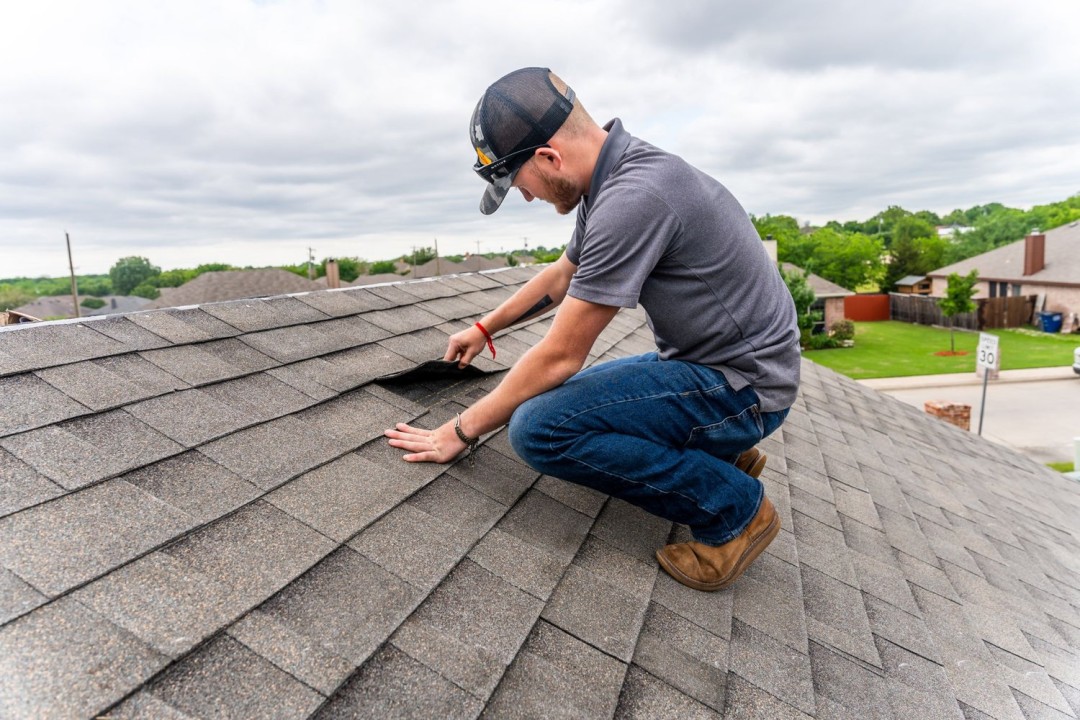
What is roll roofing? Roll roofing, also called rolled roofing or mineral-surfaced roll roofing, is an asphalt roofing material sold in long rolls instead of individual shingles. It has an asphalt-saturated mat topped with mineral granules, and it is laid in overlapping horizontal strips on low-slope roofs such as sheds, garages and porches.
Roll roofing is cheap and fast to install, but it is a single, thin layer that does not last as long as shingles or modern low-slope membranes. Below we explain how it is made, the ASTM standards behind it, roll sizes and coverage, slope limits, uses, pros and cons, and how it compares with modified bitumen and asphalt shingles.
In this article
- What is roll roofing?
- How roll roofing is made: ASTM D249 and D3909
- Roll sizes, coverage and weight
- Slope limits for roll roofing
- Single-coverage vs. double-coverage roll roofing
- Where roll roofing is used
- How roll roofing is installed
- Pros and cons of roll roofing
- Roll roofing vs. modified bitumen
- Roll roofing vs. asphalt shingles
- How long does roll roofing last?
- Frequently Asked Questions
What is roll roofing?
Roll roofing is essentially the same material as an asphalt shingle, made in a continuous sheet. A base mat is saturated and coated with asphalt, and the top surface is covered with colored mineral granules that protect the asphalt from sunlight and add some fire resistance. The bottom surface is coated with a fine mineral or sand so the roll does not stick to itself.
The building code calls it mineral-surfaced roll roofing, and you may see it abbreviated as MSR. People also call it rolled roofing, roll roofing, or simply “rolled asphalt.” All of those names describe the same basic product.
Because the roll is wide and long, it covers a lot of area quickly. That is its main appeal. It is also why it is mostly used where looks and long life matter less than cost, such as on sheds, detached garages, barns and other outbuildings.
Roll roofing is different from two other rolled products you may see in the same aisle:
- Roofing felt (tar paper) is an underlayment with no granule surface. It is not designed to be the finished roof.
- Modified bitumen is a heavier, polymer-modified membrane system designed for low-slope roofs. It also comes in rolls but performs very differently.
How roll roofing is made: ASTM D249 and D3909
Mineral-surfaced roll roofing is made to ASTM specifications, which define the mat, asphalt and granule surfacing. The two most often mentioned are:
- ASTM D249: the specification for asphalt roll roofing made with an organic felt mat (made from cellulose fibers) surfaced with mineral granules. This is the traditional type.
- ASTM D3909: the specification for asphalt roll roofing made with a glass felt (fiberglass) mat surfaced with mineral granules.
The model residential code (the International Residential Code, or IRC) requires mineral-surfaced roll roofing to conform to ASTM D3909 or ASTM D6380, Class M. ASTM D6380 covers asphalt roll roofing made with organic felt, and Class M is its mineral-surfaced class. In practice, check the wrapper or data sheet for one of those standards if the roof is going on a building that needs a permit.
Fiberglass mats resist rot and are lighter and more dimensionally stable than organic felt. Organic felt is flexible and has a long history. Either way, the finished product looks similar: a dark, granule-covered sheet.
Roll sizes, coverage and weight
Roll roofing is sold by the roll, and coverage is usually described in roofing squares. A square is 100 square feet of roof area. If that term is new to you, see our explainer on what a square is in roofing.
| Product type | Nominal roll size | Coverage per roll | Example source |
|---|---|---|---|
| Standard mineral-surfaced roll (single coverage) | 36 in x 36 ft | 1 square (100 sq ft) | Owens Corning data sheet |
| 19-inch selvedge edge roll (double coverage) | 36 in x 36 ft | 1/2 square, 17-inch exposure | TAMKO data sheet |
A standard 36-foot roll is 108 square feet, but the overlaps between courses use up some of that, which is why it is rated for about one square. Always confirm coverage on the specific product, because roll lengths and lap requirements vary between manufacturers.
Weight: roll weight varies by product and mat type, and we could not confirm a single standard figure from manufacturer data. A full roll is heavy and awkward. Check the weight printed on the wrapper or data sheet before you plan how to lift rolls onto a roof, and do not try to carry them up a ladder alone.
The Owens Corning roll we reviewed lists a Class C fire rating under ASTM E108 and UL 790. That is the lowest of the three listed classes, which matters if your local code requires a higher rating.
Slope limits for roll roofing
Slope is the most important rule for roll roofing. Under the IRC, mineral-surfaced roll roofing must not be applied on roof slopes below 1 unit vertical in 12 units horizontal (1:12, about an 8 percent slope). Manufacturers say the same; TAMKO’s selvedge roll data sheet specifies roof decks with inclines of not less than 1 inch per foot.
Other code requirements for roll roofing include:
- Solid deck: roll roofing must be fastened to a solidly sheathed roof, such as plywood or OSB.
- Underlayment: underlayment must meet the code’s underlayment section.
- Ice barrier: in areas that require it, an ice barrier is needed at the eaves just as with shingles. In Minneapolis, for example, the city says ice barrier protection is required except on detached accessory buildings with no conditioned floor area.
- Manufacturer’s instructions: installation must follow both the code and the manufacturer’s instructions.
For comparison, here is how roll roofing’s minimum slope compares with other common roofing materials under the IRC:
| Roof covering | Minimum slope (IRC) |
|---|---|
| Built-up, modified bitumen and single-ply membranes | 1/4:12 |
| Mineral-surfaced roll roofing | 1:12 |
| Asphalt shingles | 2:12 (double underlayment from 2:12 to under 4:12) |
So roll roofing fills a narrow gap: roofs too flat for shingles but steep enough to drain reasonably well. On a truly flat roof, it is the wrong product.
Single-coverage vs. double-coverage roll roofing
Roll roofing comes in two main styles, and they are installed differently.
Single-coverage roll roofing
This is the standard product. The whole top surface is covered in granules. Each course overlaps the one below by a few inches, so most of the roof has only one layer of material. It is the cheapest option and the most common on sheds and outbuildings.
Double-coverage (selvedge edge) roll roofing
Selvedge roll roofing has granules on only part of its width. On the TAMKO 19-inch selvedge roll, a 17-inch granule-surfaced strip is exposed to the weather and the remaining 19 inches is a smooth selvedge edge that is overlapped by the next course. The result is two layers of material over the whole roof, which is why each roll covers only about half a square.
Double coverage gives more protection against leaks on low slopes, at the cost of more material and labor.
Where roll roofing is used
Roll roofing is best suited to buildings where economy and speed matter more than appearance or very long life:
- Sheds and outbuildings: the most common use.
- Detached garages and workshops: especially low-slope garage roofs.
- Barns, carports and covered storage.
- Low-slope porch or addition roofs: where a slope of at least 1:12 exists but shingles are not allowed.
- Valley linings: the IRC lists mineral-surfaced roll roofing as one option for lining open valleys on shingle roofs, in some cases.
- Temporary roofs: on a structure that will be re-roofed later.
On the main roof of a house, roll roofing is less common because of its shorter life and plain appearance. Many homeowner associations and buyers also see it as a utility finish.
How roll roofing is installed
Roll roofing is one of the more DIY-friendly roofing materials, but the details still matter. This is an overview, not step-by-step instructions; for a full walkthrough, see our guide on how to install roll roofing.
Basic sequence
- Prepare the deck. Make sure the sheathing is solid, dry and smooth. Replace soft or rotted boards.
- Install edge metal and underlayment as required by code and the manufacturer, plus an ice barrier at the eaves where required.
- Lay the first course parallel to the eave, with the right overhang at the edges.
- Lap each course over the one below by the amount the manufacturer specifies, working up the roof.
- Fasten and seal using either the exposed-nail or concealed-nail method, with the manufacturer’s recommended nails and roofing cement.
- Finish ridges and edges with strips of roll roofing or ridge material as directed.
Exposed-nail vs. concealed-nail methods
With the exposed-nail method, nails go through the lap where the courses overlap and stay visible on the finished roof. It is quick but leaves more fasteners exposed to the weather. With the concealed-nail method, the top edge of each course is nailed and then covered by the next course, and the bottom edge is sealed down with roofing cement. Concealed nailing generally gives a more weather-tight result on low slopes. Which methods are allowed, and on what slopes, depends on the manufacturer’s instructions.
Safety and practical tips
- Use fall protection whenever you work on a roof, and do not work on a wet, icy, frosty or snowy roof.
- Asphalt roll roofing is stiff in cold weather and can crack when unrolled. Follow the manufacturer’s temperature guidance and let rolls relax flat before installing them.
- Store rolls on end in a dry place so they do not deform.
- If you use hot asphalt or torches for any part of a low-slope roof, leave it to trained professionals. TAMKO’s data sheet notes that NIOSH has identified heated asphalt fumes as a potential occupational carcinogen.
- Check with your local building department about permits before re-roofing any building, including a garage.
Pros and cons of roll roofing
Pros
- Low cost: roll roofing is one of the least expensive roofing materials per square.
- Fast installation: wide rolls cover large areas quickly.
- Works on low slopes: allowed down to 1:12, where shingles are not.
- DIY-friendly: it needs fewer specialized tools than many systems.
- Lightweight compared with multi-layer systems.
Cons
- Shorter life: a single thin layer wears out sooner than shingles or modern low-slope membranes.
- Plain appearance: it looks utilitarian and can lower curb appeal on a house.
- Sensitive to movement: long, wide sheets can wrinkle, blister, or crack as the deck and temperature change.
- Not for flat roofs: standing water below 1:12 will lead to leaks.
- Lower fire rating: some products carry only a Class C rating.
- Hard to repair invisibly: patches tend to show.
Roll roofing vs. modified bitumen
Modified bitumen is often called the upgrade from roll roofing, and for low-slope roofs it usually is.
| Feature | Roll roofing | Modified bitumen |
|---|---|---|
| Material | Asphalt-saturated organic or fiberglass mat with granules | Asphalt modified with polymers (SBS or APP), reinforced with polyester or fiberglass |
| Layers | Usually one (two with selvedge rolls) | Usually two or more (base sheet plus cap sheet) |
| Minimum slope (IRC) | 1:12 | 1/4:12 |
| Installation | Nails and roofing cement | Torch, hot asphalt, cold adhesive, self-adhered or mechanically attached, depending on product |
| Estimated life | Generally short; varies by product | About 20 years (InterNACHI estimate) |
| Cold-weather behavior | Stiff and prone to cracking when cold | SBS types stay flexible in deep cold |
| Cost | Lower | Higher |
The polymers in modified bitumen make it more flexible and durable than the plain asphalt in roll roofing. SBS-modified products in particular stay flexible in very cold temperatures, which matters in northern climates. If the roof is on a living space, or water damage would be expensive, modified bitumen or a single-ply membrane is usually worth the extra cost. Our flat roofing page explains those systems in more detail.
Roll roofing vs. asphalt shingles
Roll roofing and shingles share materials, but they suit different roofs:
- Slope: shingles need at least 2:12 and double underlayment below 4:12, while roll roofing can go down to 1:12.
- Layers: shingles overlap so most of the roof has two or more layers; standard roll roofing is mostly a single layer.
- Movement: individual shingles tolerate deck and thermal movement better than long, continuous sheets.
- Lifespan: InterNACHI estimates about 20 years for three-tab shingles and 30 for architectural shingles; roll roofing generally lasts less.
- Appearance: shingles have texture and shadow lines; roll roofing is flat and plain.
- Cost: roll roofing costs less to buy and install.
If your roof is 2:12 or steeper, shingles are almost always the better choice. Roll roofing makes sense when the slope is between 1:12 and 2:12 or when the building is a shed or outbuilding where cost is the main concern.
How long does roll roofing last?
Roll roofing is generally seen as a short-life, economy roof. We could not find a credible, consistent lifespan figure from an industry or government source, so we will not quote a number. What we can say is how to get the most out of it:
- More slope helps. Water should drain quickly; roofs close to 1:12 wear faster.
- Double coverage helps. Selvedge rolls give two layers over the whole roof.
- Concealed nailing helps on low slopes, where exposed nails are a common leak point.
- Good deck and ventilation help. A sound, dry deck limits wrinkling and blistering.
- Regular checks help. Look for cracks, lifted seams, exposed nails and granule loss, especially after winter.
For the exact warranty and expected performance, read the manufacturer’s data sheet and warranty for the product you buy.
Frequently Asked Questions
What is roll roofing?
Roll roofing is an asphalt roofing material sold in long rolls, usually with a mineral-granule surface like a shingle. It is laid in overlapping horizontal strips and is mostly used on sheds, garages and other low-slope or utility roofs.
Is rolled roofing the same as roll roofing?
Yes. Rolled roofing, roll roofing, mineral-surfaced roll roofing and MSR are all names for the same type of product. The term is sometimes used loosely for other rolled membranes, so check the product’s ASTM standard.
What is the minimum slope for roll roofing?
The model residential code most US states use does not allow mineral-surfaced roll roofing on slopes below 1 unit of rise in 12 units of run. For flatter roofs, use a low-slope system such as modified bitumen or a single-ply membrane.
How much does a roll of roll roofing cover?
A standard mineral-surfaced roll is about 36 inches wide by 36 feet long and covers one roofing square, or 100 square feet, according to one major manufacturer’s data. Double-coverage selvedge rolls cover about half a square each.
How long does roll roofing last?
Roll roofing is generally considered a short-life, economy roof compared with shingles or modified bitumen. Its life depends on the product, slope, exposure, installation method and climate, so check the manufacturer’s warranty for the specific product.
Can you use roll roofing on a house?
It is allowed by code on solidly sheathed roofs of at least 1:12 slope, but it is mostly used on outbuildings and secondary roofs. On a home’s main roof, shingles on steeper slopes and modified bitumen or single-ply membranes on low slopes usually perform better and look better.
Is roll roofing better than modified bitumen?
No, modified bitumen is generally the more durable low-slope option. It uses polymer-modified asphalt, is installed in two or more layers on most systems, and is allowed down to 1/4:12, while roll roofing is a single-ply economy product limited to 1:12 and steeper.
Roll roofing is a practical, low-cost choice for sheds, garages and low-slope roofs between 1:12 and 2:12, as long as you accept a shorter life and a plain look. For a low-slope roof on a living space, a modified bitumen or single-ply system is usually the better investment. If an existing low-slope roof is already leaking, our flat roof repair page explains the repair options.