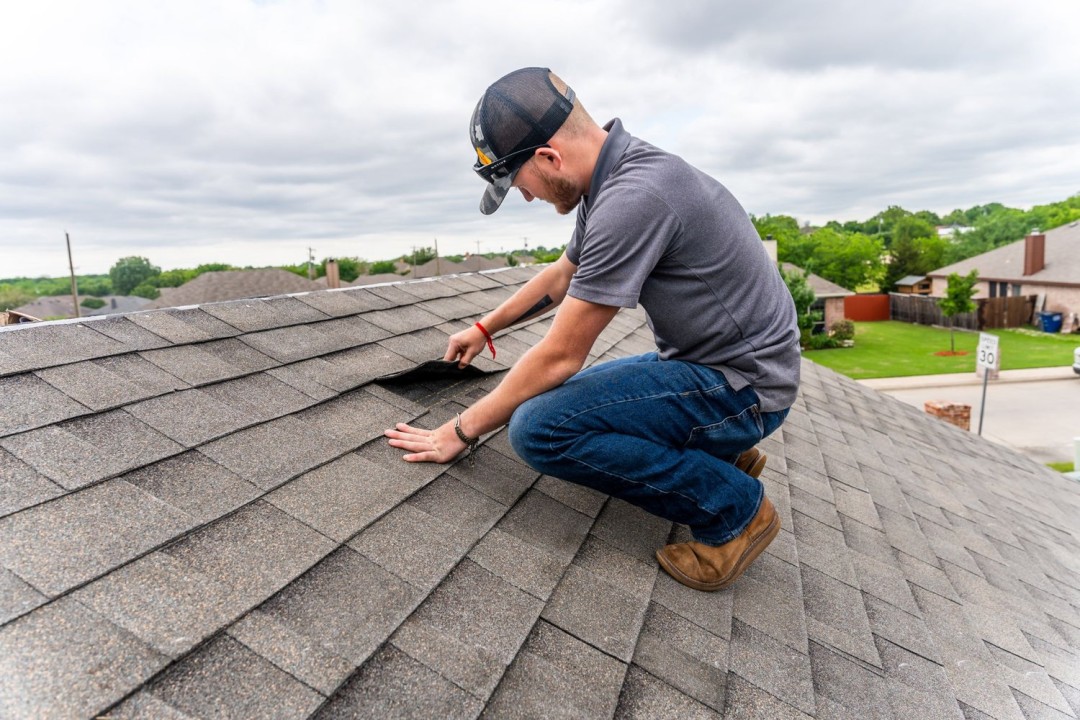
Here’s how to choose a roofing contractor in Minneapolis: check the company’s Minnesota residential roofer license on the Department of Labor and Industry (DLI) website, ask for proof of liability coverage and workers’ compensation, get at least three detailed written bids, and sign only a written contract that spells out the scope, materials, price and payment schedule. Make sure the contractor pulls the city permit, and walk away from anyone who pressures you to sign on the spot or offers to cover your insurance deductible.
This guide explains each step in detail, including the Minnesota laws that protect homeowners after storms, the questions worth asking every contractor you interview, and the red flags that should end the conversation. The same checks apply to every roofer you talk to, including us.
In this article
- Step 1: Check the License With Minnesota DLI
- Step 2: Confirm Liability Coverage and Workers’ Comp
- Step 3: Get at Least Three Written Bids
- Step 4: Get Everything in a Written Contract
- Step 5: Make Sure the Contractor Pulls the Permit
- Storm Chasers and Insurance Claims: Minnesota Rules
- Payments, Deposits and Lien Waivers
- Questions to Ask Before You Sign
- Red Flags When Choosing a Roofer
- How to Choose a Roofing Contractor: Quick Checklist
- Frequently Asked Questions
Step 1: Check the License With Minnesota DLI
Minnesota is one of the states that requires residential roofers to hold a state license. According to the Minnesota Department of Labor and Industry, anyone who contracts with a homeowner to do roofing on a one- to four-unit residential property must hold a residential roofer, residential remodeler or residential building contractor license. Most single-skill specialty contractors don’t need a state license, but roofers are specifically not exempt.
How to look up a roofer’s license
- Ask the contractor for their Minnesota license number. The Minnesota Attorney General’s Office notes that contractors who hold a license must show the license number on their contracts and in their advertising.
- Go to the DLI website (dli.mn.gov) and use its license and registration lookup tool.
- Search by license number or business name, and make sure the name matches the company on your bid and contract exactly.
- Check that the license is active and look for any disciplinary or enforcement history.
What the license type tells you
- A residential roofer license covers roofing only. DLI notes that installing gutters, downspouts, soffit and fascia requires a residential building contractor or remodeler license.
- A residential remodeler can work on existing structures but can’t build new homes or detached garages.
- A residential building contractor can do everything a remodeler does and also build new structures.
If your project includes gutters, siding or fascia work along with the roof, make sure the contractor’s license covers all of it.
Why the license matters to you
Beyond showing that a contractor has met state requirements, the license connects you to the state’s Contractor Recovery Fund. The Minnesota Department of Commerce explains that if you hire a contractor who doesn’t hold a license, you can’t make a claim against the fund. The fund has payout limits and divides money among claimants when there are several claims, so Commerce also suggests asking for a performance bond for your specific project if you want more protection.
A few narrow exemptions exist. If a contractor says they’re exempt, ask to see their Certificate of Exemption from DLI and confirm it covers roofing work.
Step 2: Confirm Liability Coverage and Workers’ Comp
Roofing is hazardous work, and you don’t want to be on the hook if something goes wrong. DLI requires license holders to carry general liability coverage of at least $100,000 per occurrence, $300,000 aggregate and $25,000 in property damage coverage, including completed operations. Those are minimums; many homeowners prefer a contractor who carries more.
How to verify coverage
- Request a certificate of insurance for general liability, and ask that it be sent to you directly from the contractor’s insurance agent rather than handed over as a photocopy.
- Check the dates. Make sure the policy will be in force during your project.
- Ask about workers’ compensation. The Minnesota Attorney General’s Office advises asking to see the contractor’s workers’ compensation policy, because you could face liability if an uncovered worker is hurt on your property.
- Call your own agent. The AG’s office also suggests checking how your homeowners policy would respond if something went wrong during the work.
Step 3: Get at Least Three Written Bids
The Minnesota Attorney General recommends getting at least three written bids that detail the scope of work, materials and total cost, and never accepting an oral estimate, no matter how small the project. Before you start calling contractors, write down what you want done so every bid covers the same work.
What a good roofing bid should spell out
- Whether the old roofing will be torn off, and how many layers will be removed.
- The specific shingle or roofing product, including manufacturer, product line and color.
- Underlayment type and where ice barrier membrane will be installed. Minnesota requires an ice barrier from the eave edge to at least 24 inches inside the exterior wall line.
- Flashing: whether chimney, wall, valley and vent flashings will be replaced or reused.
- Ventilation: ridge, roof or soffit vents to be added or replaced.
- Drip edge and any other edge metal.
- A per-sheet price for replacement decking, since damaged decking often isn’t found until the old roof comes off.
- Permit, cleanup, debris removal and dumpster costs.
- Estimated start date and duration.
How to compare bids
The lowest price isn’t automatically the best deal. The AG’s office warns that an unusually low bid can signal inexperience, inferior materials, or later price increases blamed on “unforeseen circumstances.” It also advises being wary of open-ended “cost-plus” or “time and materials” pricing. Line the bids up side by side and make sure differences in price reflect real differences in scope or materials.
For a sense of what drives roof pricing in the Twin Cities, see our roof replacement page.
Check reputation, not just price
The AG’s office suggests checking complaints with the Better Business Bureau, searching Minnesota court records for lawsuits involving customers, subcontractors or suppliers, and calling past customers to ask about their experience. Look at completed roofs in person if you can. A contractor who has done steady local work for a while should be able to give you local references and a real street address. Minnesota Commerce cautions that a P.O. box alone isn’t enough.
Step 4: Get Everything in a Written Contract
A detailed written contract protects both sides. Minnesota Commerce advises reading the entire contract before signing and making sure it includes a detailed summary of the work, a description of the materials, and the total price or how the price will be calculated. Never sign a blank or partially blank contract.
What the contract should include
- The contractor’s legal business name, address and Minnesota license number.
- A full scope of work matching the bid, including tear-off, decking, underlayment, ice barrier, flashing, ventilation and cleanup.
- Specific products by manufacturer and product name.
- Total price, payment schedule and what triggers each payment.
- How change orders work, including the unit price for replacement decking.
- Start and estimated completion dates.
- Who obtains the building permit (it should be the contractor).
- Warranty terms in writing (see below).
- The pre-lien notice required by Minnesota law (explained in the payments section below).
- For insurance-paid jobs, the 72-hour cancellation notice required by Minnesota law (explained in the storm chasers section below).
Understanding roofing warranties
There are usually two kinds of warranty on a new roof. A manufacturer’s warranty covers defects in the roofing materials themselves, and its terms depend on the product and on proper installation. A workmanship warranty comes from the contractor and covers installation errors. Get both in writing, ask how long the workmanship coverage lasts and what it excludes, and keep copies with your home records. Some manufacturers offer enhanced system warranties only through contractors in their programs, so ask which warranty applies to your specific job.
Step 5: Make Sure the Contractor Pulls the Permit
The City of Minneapolis requires a building permit for all re-roofing work, except repairs involving less than one bundle of shingles. Repairs that involve roof framing need an additional permit and a framing inspection, and a final inspection is required when the work is done. Other metro cities have similar rules, so check with your local building department if you’re outside Minneapolis.
A reputable contractor pulls the permit in their own name. The Minnesota Attorney General’s Office lists a contractor who asks you to get the permits yourself as a red flag. When the homeowner pulls the permit, the homeowner takes on responsibility for code compliance. Before work starts, ask to see the permit or look it up in the city’s records.
Storm Chasers and Insurance Claims: Minnesota Rules
After a major hailstorm or windstorm, Minneapolis neighborhoods often see an influx of out-of-town crews knocking on doors. Some do fine work; others vanish once the insurance check clears. Minnesota has specific laws aimed at insurance-funded roofing work, and knowing them helps you spot trouble. For storm-specific guidance, see our hail damage roof repair page.
Minnesota Statute 325E.66: insurance-paid work
Under Minn. Stat. 325E.66, a residential contractor doing work paid from property insurance proceeds may not:
- Advertise or promise to pay all or part of your insurance deductible, directly or indirectly.
- Offer you compensation, such as a rebate or gift, for allowing an inspection, making an insurance claim, or referring work to them.
- Give you an agreement authorizing repairs without also providing a good faith, itemized and detailed estimate of the cost of services and materials.
- Interpret your policy, advise you on your coverage or duties, or adjust the claim for you, unless they also hold a public adjuster license.
The contractor must give you written notice of these requirements with the initial estimate. If a contractor violates the law, your insurer doesn’t have to consider their estimate, and you can sue for damages.
Minnesota Statute 326B.811: the 72-hour right to cancel
If you sign a roofing contract that will be paid from an insurance claim, Minn. Stat. 326B.811 lets you cancel within 72 hours after your insurer notifies you that the claim has been denied. The contract must include a boldface notice of this right and a detachable notice of cancellation form. To cancel, mail or deliver written notice to the address in the contract; no special wording is required. The contractor must refund any payments within ten days, although they can still be paid for any emergency services they already performed, such as tarping.
Common storm-chaser warning signs
Minnesota Commerce warns homeowners to be cautious of:
- Unsolicited visits at your door, especially right after a storm.
- Unmarked trucks or vans.
- No Minnesota license number.
- High-pressure sales tactics or demands for upfront payment.
- Pressure to sign an “estimate,” “authorization” or “contingency agreement” before you’ve decided to hire them.
Commerce points out that you don’t need to sign anything to get an estimate or to let a contractor talk with your insurance company. The DLI also warns that a signed document is generally treated as a contract that obligates you to that contractor for approved repairs, so read everything before you sign.
Payments, Deposits and Lien Waivers
Keep the deposit reasonable
The Minnesota Attorney General lists a contractor who requires full or substantial payment before work begins as a red flag. A deposit to order materials can be normal, but tie the remaining payments to clear milestones, such as material delivery and final completion after the city inspection. Pay by check or card so you have a record, and avoid paying in cash.
Understand the pre-lien notice
Under Minn. Stat. 514.011, a contractor who works directly for you and uses subcontractors or material suppliers must include a pre-lien notice in the written contract. The notice warns that anyone who supplies labor or materials for the job can file a lien against your property if the contractor doesn’t pay them. A contractor who fails to give the notice loses their own lien rights.
Ask for lien waivers
The notice also explains how to protect yourself: get lien waivers signed by the suppliers and subcontractors who provided labor or materials. Before making the final payment, ask your contractor for lien waivers from the shingle supplier and any subcontractors on the job. This helps ensure you don’t end up paying twice for the same materials.
Questions to Ask Before You Sign
- What is your Minnesota license number, and does it match your business name on this bid?
- Can your insurance agent send me a current certificate of liability coverage and proof of workers’ compensation?
- Who will be on my roof: your own employees or subcontractors? Who supervises the crew?
- Will you pull the building permit, and will you be there for the final inspection?
- Are you tearing off down to the deck? How many layers are on my roof now?
- What is your per-sheet price if decking needs to be replaced?
- Which ice barrier, underlayment and ventilation products will you use, and where?
- Will you replace the flashing or reuse it?
- What manufacturer warranty applies, and what does your workmanship warranty cover and for how long?
- How will you protect my landscaping, siding and gutters, and how do you handle cleanup and nail pickup?
- What is your payment schedule, and when is the final payment due?
- Can you give me local references from roofs you completed in the past few years?
Pay attention to how the contractor answers. Clear, specific answers and a willingness to put them in writing are good signs. Vague answers or annoyance at being asked are not.
Red Flags When Choosing a Roofer
- No Minnesota license number, or a license that doesn’t match the business name.
- Offers to pay or “waive” your insurance deductible, or to give you a rebate for filing a claim. That’s illegal in Minnesota under Minn. Stat. 325E.66.
- Pressure to sign today, “storm special” pricing that expires immediately, or a request to sign something before an inspection.
- Asking for full or most of the payment upfront, or cash only.
- Asking you to pull the permit.
- Oral estimates only, or a contract with blanks or vague descriptions like “replace roof.”
- No local street address or phone number, or only a P.O. box.
- Telling you what your insurance policy covers or offering to handle your claim when they don’t hold a public adjuster license.
- Refusing to let you review documents with a trusted advisor before signing, which the Attorney General’s Office calls a major warning sign.
- A bid far below the others with no clear explanation.
How to Choose a Roofing Contractor: Quick Checklist
- Look up the license on dli.mn.gov and confirm it’s active with no unresolved enforcement actions.
- Get liability coverage and workers’ comp certificates sent from the contractor’s agent.
- Collect at least three written, itemized bids for the same scope of work.
- Check references, BBB complaints and court records.
- Read the full contract, including the pre-lien notice and, for insurance jobs, the 72-hour cancellation notice.
- Confirm the contractor pulls the permit.
- Keep the deposit reasonable and tie payments to milestones.
- Collect lien waivers before the final payment.
- Get warranty terms in writing.
If you’re comparing options for residential work, our residential roofing page explains the services typically included, so you can ask every bidder the same questions.
Frequently Asked Questions
Do roofers need a license in Minnesota?
Yes. Minnesota requires anyone who contracts with homeowners to do roofing on one- to four-unit residential properties to hold a residential roofer, remodeler or building contractor license from the Department of Labor and Industry.
How do I check a roofing contractor’s license in Minnesota?
Use the license and registration lookup tool on the Minnesota Department of Labor and Industry website, dli.mn.gov. Search by license number or business name and confirm the license is active and the name matches your contract.
Can a roofer pay my insurance deductible in Minnesota?
No. Minn. Stat. 325E.66 prohibits residential contractors doing insurance-paid work from advertising or promising to pay all or part of a homeowner’s deductible, directly or indirectly.
Can I cancel a roofing contract after my insurance claim is denied?
Yes. Under Minn. Stat. 326B.811, you can cancel a roofing contract paid from an insurance claim within 72 hours after your insurer notifies you the claim was denied, by mailing or delivering written notice to the contractor.
How many roofing estimates should I get?
The Minnesota Attorney General recommends getting at least three written bids that detail the scope of work, materials and total cost. Never accept an oral estimate.
Who should pull the roofing permit in Minneapolis?
Your contractor should. Minneapolis requires a permit for all re-roofing except repairs involving less than one bundle of shingles, and the Attorney General’s Office treats a contractor asking you to pull permits as a red flag.
How much deposit should a roofer ask for?
Minnesota doesn’t set a specific figure, but the Attorney General’s Office warns against contractors who require full or substantial payment before work begins. Tie remaining payments to milestones such as material delivery and final inspection.
Choosing a roofer is mostly about verification: confirm the license, the coverage, the permit and the paperwork, then compare bids on scope and quality rather than price alone. Apply the same checks to every company you talk to, including a Minneapolis roofing company like ours.
If you’d like a detailed written estimate to compare with your other bids, call (888) 657-0348 for a free estimate.