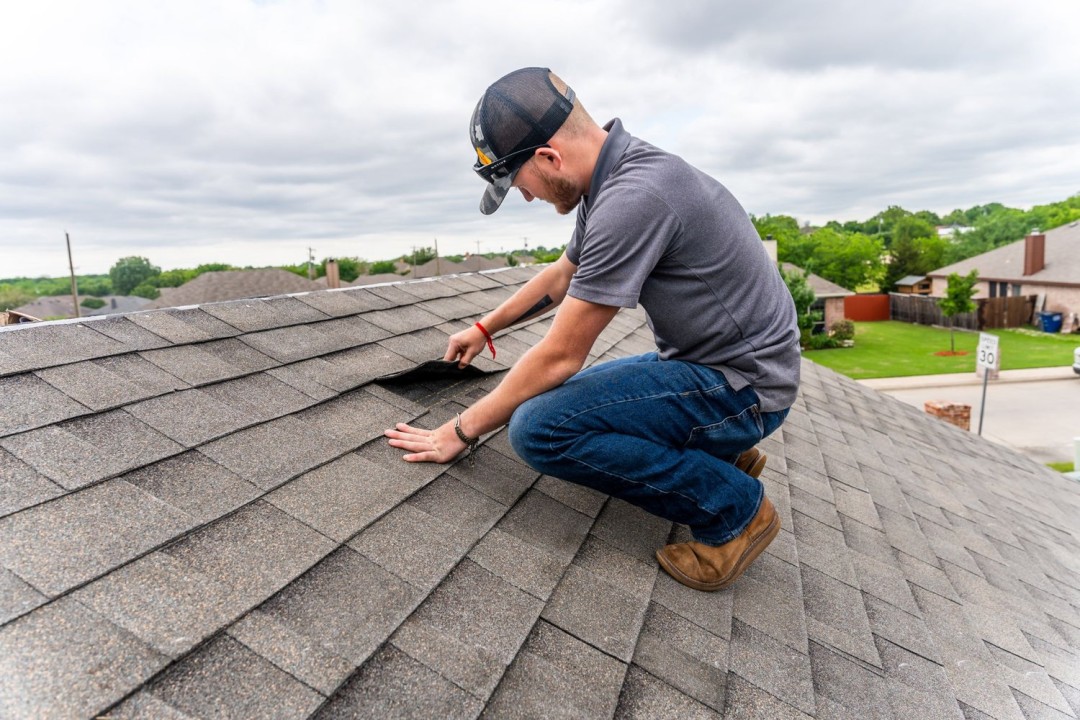
What is composition roofing? It’s simply another name for asphalt shingle roofing. A composition (or “comp”) shingle is made of a fiberglass mat soaked and coated with asphalt and topped with colored mineral granules, and it’s the most common roof covering on American homes. The name comes from the fact that the shingle is a composite of several materials rather than a single natural one like wood or slate.
You’ll see the term on real estate listings, inspection reports, insurance paperwork and roofing estimates. This guide explains what’s inside a composition shingle, the main styles, how the product evolved, how it differs from “composite” or synthetic shingles, and the honest pros and cons.
In this article
- What “Composition Roofing” Means
- What Composition Shingles Are Made Of
- Types of Composition Shingles
- A Short History of Composition Roofing
- Composition vs. Composite (Synthetic) Roofing
- Pros and Cons of Composition Roofing
- Lifespan, Warranties and Ratings to Look For
- Installing Composition Shingles
- Frequently Asked Questions
What “Composition Roofing” Means
“Composition roofing,” “comp shingles,” “asphalt shingles” and “asphalt composition shingles” all describe the same product. GAF, one of the largest shingle manufacturers, says composition roofs are typically just called asphalt-shingle roofs. Professional Roofing, the National Roofing Contractors Association’s magazine, describes asphalt shingles as the most popular roofing product in the United States.
Which term you hear is mostly a matter of habit: insurers, inspectors and listing agents often write “comp,” while most homeowners just say “shingles.” If a listing says “comp roof,” it means an asphalt shingle roof.
What Composition Shingles Are Made Of
A modern composition shingle has four main layers, each with a job:
| Layer | What it is | What it does |
|---|---|---|
| Fiberglass mat | A thin sheet of glass fibers | Gives the shingle strength, tear resistance and shape |
| Asphalt coating | Coating-grade asphalt applied to both sides of the mat | Waterproofs the shingle and holds the granules |
| Mineral granules | Colored mineral granules embedded in the top surface | Shield the asphalt from UV light and give the roof its color |
| Back surfacing | A fine mineral layer such as sand, talc or limestone on the underside | Keeps shingles from sticking together in the bundle |
Most shingles also have a factory-applied sealant strip. Once the roof warms up in the sun, the strip bonds each shingle to the one below it, which helps resist wind uplift. Some products add algae-resistant granules to fight the dark streaks common on shaded or humid roofs, and some premium lines blend rubber-like polymers into the asphalt (more on that below).
In the U.S., fiberglass-mat shingles are made to the ASTM D3462 standard, which sets minimum properties such as mat weight and tear strength. Building codes reference it as a minimum requirement.
Types of Composition Shingles
Composition shingles come in three broad tiers. They share the same basic ingredients but differ in thickness, appearance, weight and price.
3-tab (strip) shingles
Three-tab shingles are flat, single-layer strips with two cutouts that create three equal “tabs” when installed. The Asphalt Roofing Manufacturers Association (ARMA) describes strip shingles as roughly three times as long as they are wide; Roof Online notes the traditional size is 36 by 12 inches, with a roughly 1-meter length now increasingly common. They give a uniform, brick-like pattern.
Three-tab is the most budget-friendly option. GAF lists 25 to 30-year limited warranties for its three-tab products. They’re thinner and lighter than other tiers, and have been losing ground to architectural shingles on most new roofs.
Architectural (laminated or dimensional) shingles
Architectural shingles bond two (or occasionally more) layers together, with irregular cutouts that create shadow lines and a textured, three-dimensional look that suggests wood shakes. ARMA notes they’re favored by builders, roofers and homebuyers, and Roof Online calls them the most popular type installed in North America today. “Architectural,” “laminated” and “dimensional” are used interchangeably.
Compared with 3-tab shingles, they’re thicker, heavier and longer-lasting, and they usually carry better warranties.
Luxury (designer or premium) shingles
Luxury shingles are the thickest, heaviest laminated products, designed to imitate slate or hand-split cedar shakes more convincingly. GAF calls them designer shingles and notes they’re usually the most expensive asphalt option. They often have the best impact ratings and longest warranties in a manufacturer’s lineup.
Polymer-modified and impact-resistant shingles
Across all tiers, some shingles are made with SBS (styrene-butadiene-styrene) polymer blended into the asphalt. Roof Online puts the typical blend at 3% to 12% SBS, which makes the shingle more flexible in cold weather and more resistant to cracking, tearing, wind and hail. Many impact-resistant shingles carry a Class 4 rating under the UL 2218 impact test, the highest class in that standard.
| Feature | 3-tab | Architectural | Luxury / designer |
|---|---|---|---|
| Layers | Single | Two (sometimes more) | Multiple, thickest |
| Look | Flat, uniform | Textured, dimensional | Mimics slate or shake |
| Relative cost | Lowest | Moderate | Highest |
| Estimated life (InterNACHI guideline) | About 20 years | About 30 years | Varies by product; see warranty |
| Weight | Lightest | Heavier | Heaviest |
Weight matters for handling, delivery and structure. For bundle weights by shingle type, see our guide to how much a bundle of roofing shingles weighs.
A Short History of Composition Roofing
Asphalt roofing is older than many people expect. According to industry histories cited by NRCA’s Professional Roofing magazine and others:
- 1893: “Asphalt prepared roofing,” a granule-free product similar to today’s roll roofing, was developed.
- 1897: Slate granules were added to the surface for durability.
- 1901 to 1903: The material was cut into individual shingles. Henry Reynolds of Grand Rapids, Michigan, is often credited with the first asphalt shingles.
- 1920s: Fire underwriters campaigned against flammable wood shingles, helping asphalt shingles spread quickly.
The organic mat era
For most of the 20th century, composition shingles were built on an “organic” mat. Early mats were felt made largely from cotton rags; later ones used wood fibers and recycled paper. The organic mat was first saturated with asphalt, then coated with a harder asphalt on both sides, so these shingles used a lot of asphalt and were heavy.
The switch to fiberglass
Fiberglass mats were first used in the 1960s. Early versions had problems, but the technology improved, and fiberglass shingles overtook organic ones by the early 1980s. Fiberglass shingles use less asphalt, weigh less, and can achieve a Class A fire rating, the highest under the ASTM E108/UL 790 test.
Manufacturers phased out organic shingles during the 2000s, and Roof Online reports the last major maker stopped producing them in 2011. Today, essentially every new composition shingle sold in North America uses a fiberglass mat. If an inspection report on an older home mentions “organic shingles,” that roof is likely well past its prime.
Composition vs. Composite (Synthetic) Roofing
This is where the terms get confusing. “Composition” and “composite” sound almost identical, and some people use them interchangeably, but in roofing they usually mean different products.
- Composition shingles are asphalt-based: fiberglass mat, asphalt and mineral granules.
- Composite or synthetic shingles are made mainly from engineered polymers (plastics) molded to look like slate or cedar shake. DaVinci, a well-known maker, describes its products as virgin resins with UV stabilizers.
| Feature | Composition (asphalt) | Composite / synthetic |
|---|---|---|
| Main material | Fiberglass mat, asphalt, mineral granules | Molded engineered polymers |
| Appearance | Flat or dimensional shingles; luxury lines mimic slate or shake | Individual tiles molded to mimic slate or shake |
| Typical ratings | Varies by product; Class 4 impact and Class A fire available | Varies by product; DaVinci, for example, lists Class 4 impact, Class A fire and 110 mph wind |
| Cost | Generally among the most affordable roofing options | Generally a premium product |
| Availability and installers | Everywhere; nearly every residential roofer installs them | Fewer installers; manufacturer-specific installation methods |
If a quote or listing says “composite,” ask exactly which product it means. The difference in price and performance can be large.
Pros and Cons of Composition Roofing
Advantages
- Affordable: GAF notes composition roofs cost less than metal, tile or slate, and they’re usually the most economical choice for a steep-slope home.
- Familiar and widely installed: Almost every residential roofer works with asphalt shingles, which makes it easier to compare bids and find repair help later.
- Fast installation: Shingles are light enough to carry by hand and quick to nail down, so most homes can be reroofed in a short time.
- Lots of choice: Dozens of colors and three style tiers, from basic 3-tab to luxury shingles that imitate slate.
- Easy repairs: Individual damaged shingles can usually be replaced without disturbing the rest of the roof.
- Upgrade options: Impact-resistant, algae-resistant and high-wind-rated products are widely available.
Disadvantages
- Shorter life than premium materials: InterNACHI’s guideline puts 3-tab shingles at about 20 years and architectural at about 30, compared with much longer estimates for slate, tile or many metal roofs. Hot climates and severe weather shorten that.
- Hail and wind vulnerability: Standard shingles can bruise, crack or lose granules in hail, and lift or tear in high winds if they weren’t installed and sealed properly.
- Granule loss over time: As granules wear off, the asphalt is exposed to UV and ages faster.
- Not for flat roofs: Shingles are a steep-slope product and need enough pitch to shed water. Low-slope roofs need different materials.
- Quality varies: InterNACHI notes that shingles that look alike can differ widely in tested quality, so brand and product line matter.
- Environmental footprint: Asphalt is petroleum-based, and while shingle recycling exists, many torn-off shingles still end up in landfills.
Lifespan, Warranties and Ratings to Look For
How long a composition roof lasts depends on the shingle tier, ventilation, installation quality, roof color and exposure, and the weather it sees. InterNACHI’s estimates (about 20 years for 3-tab and 30 for architectural) are useful guidelines, not promises.
When comparing products, look at these ratings on the shingle wrapper or spec sheet:
- ASTM D3462: The baseline standard for fiberglass-mat shingles.
- Wind rating (ASTM D3161 or D7158): Under ASTM D3161, Class D shingles pass at 90 mph and Class F at 110 mph.
- Impact rating (UL 2218): Class 4 is the highest impact class.
- Fire rating (ASTM E108/UL 790): Class A is the highest.
- Manufacturer warranty: Read what it covers (usually manufacturing defects), whether it’s prorated, and whether it transfers when you sell. Warranties typically depend on the shingles being installed according to the manufacturer’s instructions.
Installing Composition Shingles
Composition shingles are the roofing material most often tackled by DIYers, but a full reroof is still physically demanding and risky work at height. If you’re considering it, our step-by-step guide on how to install roofing shingles covers the process, and our explainer on what a square is in roofing will help you estimate materials.
Whatever you decide, keep safety first: use proper fall protection, avoid working on wet, icy or very hot roofs, follow the shingle manufacturer’s installation instructions so the warranty stays valid, and check with your local building department about permits and code requirements before you start.
Frequently Asked Questions
Is composition roofing the same as asphalt shingles?
Yes. Composition roofing, comp shingles and asphalt shingles all refer to the same product: a fiberglass mat coated with asphalt and topped with mineral granules.
What is the difference between composition and composite roofing?
Composition roofing is asphalt-based, while composite or synthetic roofing is typically molded from engineered polymers to look like slate or shake. Composite products are usually more expensive and installed by fewer roofers.
How long does a composition roof last?
InterNACHI’s guideline estimates about 20 years for 3-tab shingles and about 30 years for architectural shingles. Actual life depends on the product, installation, ventilation and weather.
Are composition shingles still made with organic mats?
No. Manufacturers phased out organic-mat shingles during the 2000s, and the last major manufacturer stopped making them in 2011. New composition shingles use fiberglass mats.
Are architectural shingles better than 3-tab shingles?
For most homes, yes. Architectural shingles are thicker, have a more dimensional look and generally carry better warranties and longer estimated lifespans, though they cost more than 3-tab shingles.
Can composition shingles be installed on a flat roof?
No. Composition shingles are made for sloped roofs and need enough pitch to shed water; low-slope and flat roofs require membrane or other low-slope roofing systems.
Composition roofing remains the default choice for most homes because it balances cost, appearance and performance. If your current comp roof is worn out and you’re weighing your options, our roof replacement page explains what a full reroof involves.