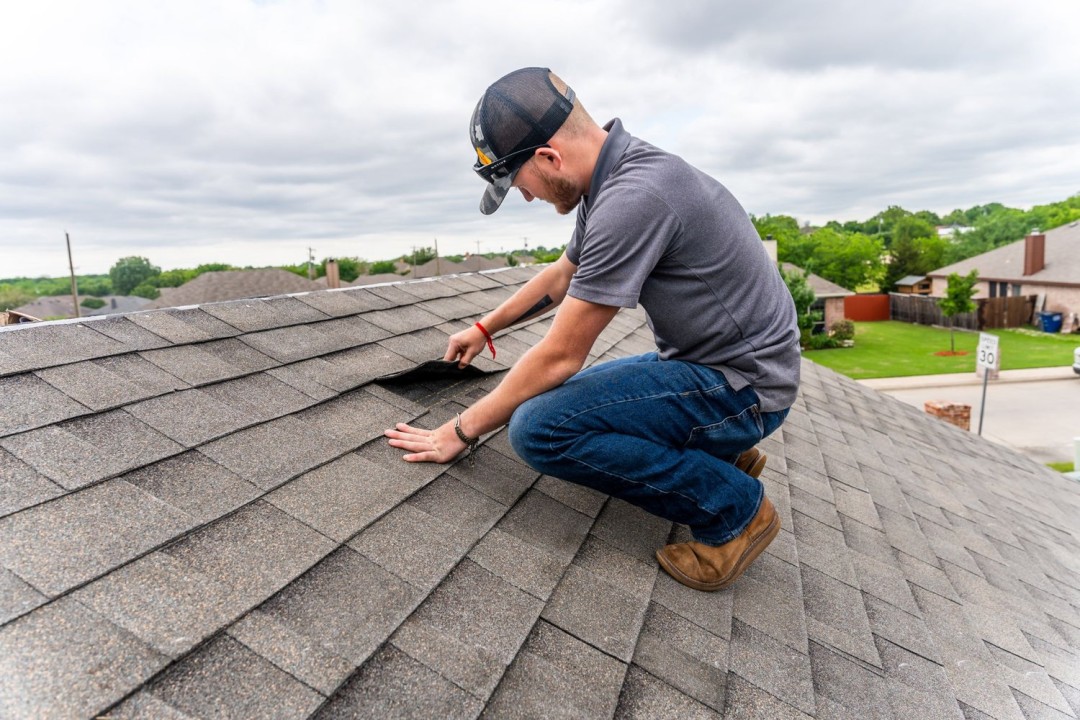

To file a roof insurance claim Minnesota homeowners should document the hail damage with photos, make only temporary repairs to stop leaks, report the loss to their insurer as soon as possible, and then work with the company’s adjuster on an inspection and estimate. Before you sign with any roofer, know two Minnesota laws: a contractor can’t promise to pay your deductible, and you can cancel an insurance-funded roofing contract within 72 hours after your claim is denied.
Below is a step-by-step walkthrough of the claim process, based on guidance from the Minnesota Department of Commerce and the state statutes that govern insurers and roofing contractors. It’s general information, not legal advice. For questions about your specific policy, talk to your agent, insurer or an attorney.
In this article
- Before You File: Confirm the Damage and Read Your Policy
- Step-by-Step: Filing a Hail Roof Claim in Minnesota
- How Long Does the Insurer Have? Minnesota Claim-Handling Rules
- Minnesota Laws on Roofers and Insurance Claims
- Company Adjusters vs. Public Adjusters
- If Your Claim Is Denied or Underpaid
- When Your Mortgage Company Is on the Check
- After the Claim: Repair or Replace, and Planning Ahead
- Frequently Asked Questions
Before You File: Confirm the Damage and Read Your Policy
A claim goes more smoothly when you know two things up front: whether hail actually damaged the roof, and what your policy says about it.
Look for evidence of hail from the ground
Don’t climb onto the roof. Instead, check things you can see safely: dents in gutters, downspouts and roof vents, bent A/C condenser fins, spatter marks on painted or metal surfaces, and piles of shingle granules at downspout outlets. The Insurance Institute for Business & Home Safety (IBHS) calls this collateral evidence, and it helps confirm that hail hit your property. If you see these signs, a professional roof inspection can confirm whether the shingles themselves are damaged.
Know your deductible
Some homeowners policies carry a separate wind/hail deductible. According to the Department of Commerce, it can be a set dollar amount or a percentage of the home’s value, such as 1 percent or more of its replacement value. The Department of Commerce has urged homeowners to review wind and hail coverage at renewal and to “consider the math” on storm deductibles. If the repair cost is close to your deductible, a claim may not make financial sense.
Understand how the roof will be valued
The Department of Commerce defines the key terms this way:
| Term | What it means |
|---|---|
| Deductible | The amount you pay before coverage begins. |
| Actual cash value (ACV) | The value of damaged property after depreciation is subtracted. |
| Replacement cost value (RCV) | The cost to repair or replace damaged property without subtracting depreciation. |
| Depreciation | The reduction in value due to age, wear and tear, or condition. |
| Additional living expenses (ALE) | Coverage for temporary housing and extra costs if a covered loss makes your home unlivable. |
With a replacement cost policy, insurers often pay the ACV first and release the withheld depreciation after repairs are complete. With an ACV-only policy, or a policy that pays roofs on an ACV basis, an older roof can be worth much less than the cost of replacing it. Request a complete copy of your policy (the Department of Commerce recommends this) and read the roof-related sections, including any time limits for completing repairs.
Step-by-Step: Filing a Hail Roof Claim in Minnesota
1. Stay safe and document the damage
Once the storm has passed and it’s safe, take photos and video of everything: hailstones next to a coin or ruler, dented gutters, vents and A/C units, damaged siding and screens, and any interior leaks or ceiling stains. Note the date and time of the storm. The Department of Commerce advises documenting damage before cleaning up and keeping damaged items until the adjuster has seen them.
2. Prevent further damage
Your policy expects you to take reasonable steps to protect the home. If water is getting in, arrange a temporary tarp or cover, ideally installed by a professional rather than by you on a wet or damaged roof. Keep every receipt. The Department of Commerce notes that temporary repairs may be reimbursed, and that damage caused by failing to make them may not be covered. Hold off on permanent repairs until the adjuster has inspected.
3. Report the claim promptly
Contact your agent or insurance company as soon as you can. Have your policy number, a description of the damage and your photos ready. Ask for:
- Your claim number
- The adjuster’s name and contact information
- What the insurer needs from you next, and whether you should get repair estimates
- An estimate of how long the claim will take
- Information about additional living expenses, if the home isn’t livable
4. Keep a claim log
Write down every conversation: who you spoke with, the date, and what was said. Save emails and letters in one folder. The Department of Commerce recommends tracking all expenses and insurer contacts throughout the claim.
5. Meet the adjuster
The insurer’s adjuster will inspect the roof and decide whether, and how much, the company will pay. Ask for identification or a business card. It’s common for homeowners to have their own roofer present at the inspection so both parties look at the same damage. A roofer can point out the damage it found and supply its own itemized estimate, but under Minnesota law it cannot negotiate the claim on your behalf (more on that below).
6. Review the estimate and settlement offer
Compare the adjuster’s estimate line by line with your roofer’s itemized estimate. Look at the roof area measured, the number of slopes included, tear-off, underlayment, flashing, vents, ridge caps, and any code-required items. If something is missing, ask the adjuster to explain or reinspect. The Department of Commerce advises against accepting the first offer automatically if it doesn’t seem fair, and suggests negotiating instead.
7. Complete repairs and close out the claim
Once you’ve agreed on the scope, hire a contractor, complete the work, and send the insurer whatever it requires (often a final invoice) to release any withheld depreciation. Check your policy for the deadline to complete repairs if you want the full replacement cost.
How Long Does the Insurer Have? Minnesota Claim-Handling Rules
Minnesota Statutes section 72A.201 sets standards for how insurers handle claims. Among the key deadlines:
- Acknowledge your claim within 10 business days of notice and provide the forms and instructions you need, along with the name and phone number of someone who can help.
- Reply within 10 business days to other claim communications that ask for a response.
- Accept or deny within 30 business days after notice of the claim, unless the investigation can’t reasonably be finished in that time. If more time is needed, the insurer must tell you why and when it expects to finish.
- Respond within 60 business days after receiving a properly completed proof of loss.
- Explain denials in writing. A denial based on a specific policy provision must cite that provision.
- Pay within 5 business days after receiving an agreed settlement, or after you meet any conditions of the agreement, whichever is later.
The same statute says an insurer can’t reduce a settlement for depreciation on an item that wasn’t affected by age, use or obsolescence. It also says that if the insurer requests a repair estimate after you’ve already submitted two, the insurer pays for it.
There is also a deadline on your side. Minnesota’s standard fire policy provisions, in Minnesota Statutes section 65A.01, require any lawsuit over a claim to be started within two years after the loss. Don’t let a disputed claim drift; if you think you may need legal help, talk to an attorney well before that point.
Minnesota Laws on Roofers and Insurance Claims
Minnesota has specific rules for residential roofers and other residential contractors whose work is paid from insurance proceeds. Knowing them helps you spot sales tactics that cross the line.
Minn. Stat. 325E.66: deductibles, estimates and adjusting
Under section 325E.66, a residential contractor paid from property or casualty insurance proceeds may not:
- Offer inducements for your business, such as advertising or promising to pay all or part of your insurance deductible, or paying you for allowing an inspection, filing a claim or referring others.
- Give you a repair agreement without a good-faith, itemized, detailed estimate of the cost of the work.
- Interpret your policy or adjust your claim. A contractor may not interpret policy terms, advise you on coverage or your duties under the policy, or adjust a claim on your behalf unless it holds a public adjuster license under Minnesota Statutes chapter 72B.
The contractor must give you written notice of these requirements with its initial estimate, and your insurer must include a similar notice with its initial estimate. If a contractor violates the law, your insurer doesn’t have to consider that contractor’s estimate. Homeowners and insurers can sue a violating contractor for resulting damages, and the Department of Labor and Industry (DLI) enforces the law.
Minn. Stat. 326B.811: the 72-hour right to cancel
If you sign a contract with a residential roofer (or a building contractor or remodeler providing roofing services) and the work is to be paid from insurance proceeds, section 326B.811 lets you cancel that contract within 72 hours after your insurer notifies you that the claim has been denied. Key points:
- You cancel by giving written notice to the contractor at the address listed in the contract. No particular form is required, and a mailed notice counts as given when it is properly addressed, stamped and deposited in a mailbox.
- Before you sign, the contractor must give you a boldface notice of this right and a completed, detachable “Notice of Cancellation” form attached to the contract.
- Within 10 days after you cancel, the contractor must return any payments and any note or other evidence of debt.
- If the contractor already performed emergency services, such as a temporary tarp, it is still entitled to be paid for that work.
Other contractor protections
Residential roofers must hold a Minnesota license from DLI. You can check a contractor’s license and any enforcement history with DLI’s online license lookup. The Department of Commerce adds a few practical points:
- Don’t sign anything until you’ve decided on a contractor. You don’t need to sign to get an estimate or to let a contractor talk with your insurance company. DLI warns that a signed document, whatever it’s called, is generally treated as a contract and can obligate you to use that contractor for the repairs your insurer approves.
- Watch for storm-chaser warning signs: unsolicited door-to-door visits, high-pressure tactics, demands for large upfront payments, unmarked vehicles and no Minnesota license number.
- Get a clear contract listing the work, materials and total price (or how the price will be calculated).
- Know about the Contractor Recovery Fund. It can compensate homeowners for certain losses caused by a contractor with a Minnesota license, up to $100,000 per contractor in total across all claims. Hiring an unlicensed contractor means you can’t use the fund.
Company Adjusters vs. Public Adjusters
The adjuster your insurer sends works for the insurance company. You can also choose to hire a public adjuster, who represents you in documenting the loss and negotiating with the insurer. The Department of Commerce describes this as “an option, not a requirement.”
Public adjusters are typically paid a percentage of the final settlement. Before hiring one, the Department of Commerce suggests you check the adjuster’s license and disciplinary history through its online license lookup, get a written contract that spells out all fees, and decide whether the help is likely to recover enough to offset the cost. Avoid anyone who claims to be from a government agency or says their services are required for your insurer to pay.
If Your Claim Is Denied or Underpaid
A denial or a low offer isn’t always the final word. The Department of Commerce recommends these steps:
- Ask for a written explanation of the denial and the specific policy language it relies on.
- Review your policy’s coverage terms and exclusions. Note that the Department points out some items, such as undamaged shingles, may not be covered.
- Provide more evidence. Additional photos, a second inspection or a detailed contractor estimate can help, especially if the adjuster missed slopes or soft-metal damage.
- Ask for a reinspection if you believe damage was overlooked.
- Consider appraisal. Most policies include an appraisal clause for disagreements over the amount of the loss. You and the insurer each choose an appraiser, the two appraisers select an umpire, and the panel decides the value. Each side generally pays its own appraiser and splits the umpire’s cost.
- Contact the Department of Commerce. Its Consumer Services Center can answer questions and work to resolve disputes between consumers and insurers. Call 651-539-1600 (or 800-657-3602 in Greater Minnesota), email [email protected], or file a complaint online.
Remember that if your claim is denied and you’ve already signed with a roofer for insurance-funded work, the 72-hour cancellation window under section 326B.811 starts when your insurer notifies you of the denial.
When Your Mortgage Company Is on the Check
If you have a mortgage, the settlement check will likely be made out to both you and your lender. The Department of Commerce explains how servicers typically handle it:
- For minor damage with a settlement under $10,000, the servicer usually endorses the check and returns it to you.
- For major damage, servicers often hold the funds and release them in stages, commonly one-third up front, one-third when work is about half done, and the final third at completion. The servicer may require an inspection before the final release.
Call your mortgage servicer early in the process so the check endorsement doesn’t delay your repairs. Keep making your regular mortgage payments in the meantime.
After the Claim: Repair or Replace, and Planning Ahead
Whether your settlement covers spot repairs or a full roof depends on how widespread the damage is and what your policy covers. Scattered damage on a newer roof may be repairable; widespread damage across several slopes often leads to roof replacement.
If you’re replacing, think about the next storm. Minnesota requires insurers to offer a premium discount for roofs built or upgraded to the IBHS FORTIFIED Roof standard, and the state’s Strengthen Minnesota Homes program offers grants toward FORTIFIED upgrades for eligible homeowners. Impact-resistant shingles are another option worth discussing with your roofer and agent.
Finally, keep your claim file, photos, contract, invoices and the manufacturer’s warranty paperwork together. They’ll be useful for future claims and when you sell the home.
Frequently Asked Questions
How long do I have to file a roof insurance claim in Minnesota?
Your policy sets the notice requirements, and most require prompt reporting, so contact your insurer as soon as you can after the storm. Separately, Minnesota’s standard fire policy provisions require any lawsuit over the claim to be started within two years after the loss.
Can a roofer pay or waive my insurance deductible in Minnesota?
No. Minnesota Statutes section 325E.66 prohibits residential contractors paid from insurance proceeds from advertising or promising to pay all or part of your deductible, or offering other compensation to get your business.
Can my roofer talk to my insurance company for me?
A roofer can share its findings and itemized estimate, and you don’t need to sign anything to let a contractor talk with your insurer. Under Minnesota law, though, a contractor cannot interpret your policy or adjust your claim unless it holds a public adjuster license.
What happens if I sign with a roofer and my claim is denied?
Under Minnesota Statutes section 326B.811, you can cancel an insurance-funded residential roofing contract within 72 hours after your insurer notifies you of the denial. Send written notice to the address in the contract; the contractor must refund payments within 10 days, minus any emergency services it performed.
How long does a Minnesota insurer have to respond to my claim?
Under Minnesota Statutes section 72A.201, an insurer generally must acknowledge a claim within 10 business days and accept or deny it within 30 business days after notice, or explain why more time is needed. Agreed settlements must be paid within 5 business days.
Who can I contact if I have a problem with my insurance company?
The Minnesota Department of Commerce Consumer Services Center handles questions and complaints about insurers. You can call 651-539-1600 (or 800-657-3602 in Greater Minnesota) or file a complaint online.
Will filing a hail claim raise my premium?
It can depend on your insurer, your claims history and the rating factors in your policy. Ask your agent before filing if you’re concerned, especially if the damage is close to your deductible.
A hail claim is much easier when you document early, know your policy and understand the Minnesota rules that protect you. If you need help sorting out storm damage, our hail damage roof repair page explains how we inspect and repair storm-damaged roofs.
Need a second set of eyes on your roof after a storm? Call Minneapolis Roofing Company at (888) 657-0348 for a free estimate.