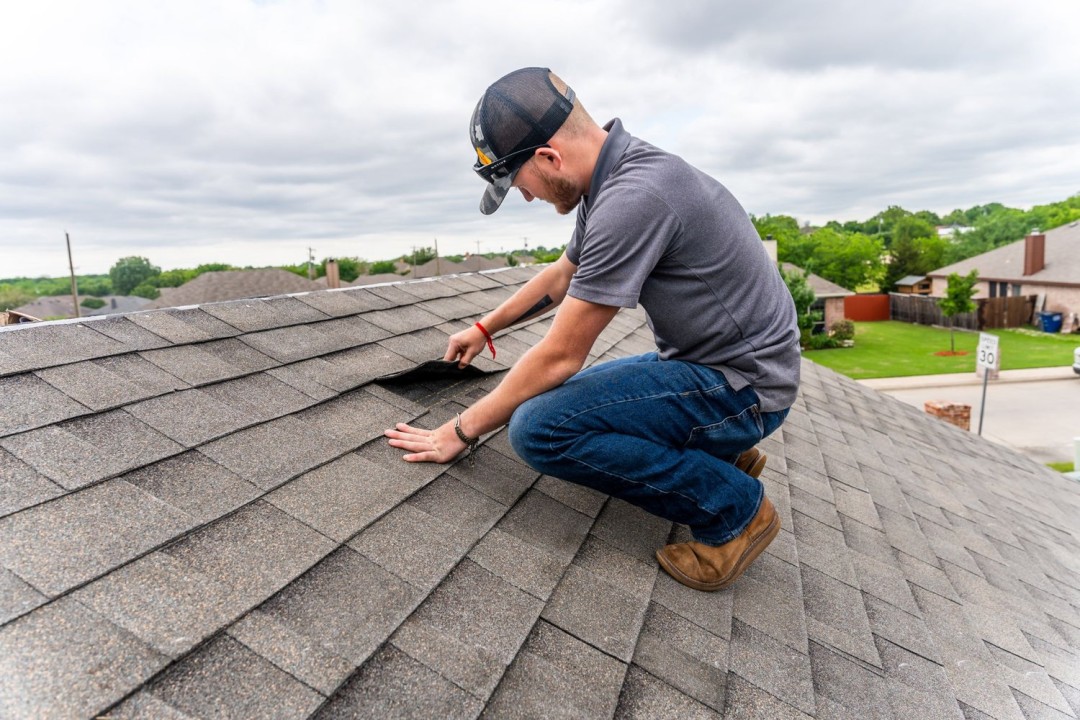
Roof wind damage usually shows up as missing shingles, shingles that are creased or folded back, tabs that have come unsealed and lift in a breeze, and loose or missing pieces along the ridge, rakes and eaves. Most of it starts at the roof edges, where wind pressure is strongest, and much of it can be spotted from the ground without ever climbing a ladder.
This guide covers how wind actually damages a roof, what shingle wind ratings mean, the specific signs to look for after a Minneapolis storm, how to protect the house until repairs are made, and how to document the damage for an insurance claim.
In this article
- How Wind Damages a Roof
- Signs of Roof Wind Damage
- Why Ridges, Rakes and Eaves Fail First
- A Safe Ground-Level Check After a Storm
- Shingle Wind Ratings: ASTM D3161 and D7158
- Wind Damage vs. Hail Damage vs. Normal Aging
- Temporary Protection Until Repairs Are Made
- Documenting Wind Damage for Insurance
- Repair or Replace After Wind Damage?
- Frequently Asked Questions
How Wind Damages a Roof
Wind doesn’t just push on a roof. As it flows over the house, it creates suction (uplift) on the roof surface, and that suction is strongest at the edges and corners. Building science guidance from the U.S. Department of Energy’s Building America program notes that roof edges see the highest pressures and that most wind blow-off starts at the edges. Once one piece lifts, wind can get underneath it and peel back the next.
The sealant bond is what holds shingles down
Asphalt shingles are nailed, but their wind resistance depends heavily on the adhesive strip that bonds each course to the one below it. That strip is activated by heat from the sun. If shingles were installed late in the season and never fully sealed, or if the bond has broken with age, the tabs can flutter and lift in wind that a well-sealed roof would shrug off. The asphalt roofing industry notes that how long shingles take to seal depends on slope, orientation and sun exposure, which is why roofers sometimes hand-seal shingles installed in cold weather.
Wind damage is often cumulative
A roof doesn’t have to lose shingles in one storm to be damaged. Repeated flexing can crease shingles, break the sealant bond and loosen nails a little more each time. A roof that came through one windstorm looking fine may start losing shingles in the next, because the earlier storm already weakened them.
Debris and trees
Wind also throws things at the roof. Falling branches can puncture shingles and decking, crack flashing and knock gutters loose. In older Minneapolis neighborhoods with large mature trees over the house, limb damage is often a bigger problem than the wind pressure itself.
Signs of Roof Wind Damage
Here’s what roofers and adjusters look for when they assess roof wind damage. Several of these can be seen from the yard; others need a closer look by someone with proper fall protection.
Missing shingles
The most obvious sign. Look for patches where a different color shows through, usually the black of the underlayment, the tan or gray of felt, or bare wood decking. Shingles in the yard or the street after a storm are a giveaway even if you can’t see the gap from the ground.
Creased or folded shingles
When a tab lifts and bends back, it often leaves a horizontal crease across the shingle, usually just above the sealant line. A creased shingle may lie back down and look normal from a distance, but the fold breaks the mat and the shingle has lost much of its wind resistance. Creases tend to show up as faint straight lines that catch the light differently than the shingles around them.
Lifted or unsealed tabs
Tabs that are no longer stuck to the course below will move in a light breeze. On a windy day after a storm, watch the roof from the ground for any shingles that flutter or stand up at the edges. Unsealed shingles may not be damaged yet, but they are the next ones to go.
Damaged ridge caps and hip shingles
Ridge and hip caps sit at the highest point of the roof and take wind from both sides. Look for missing caps, caps that have shifted out of line, or exposed nail heads along the ridge.
Lifted edges along the rakes and eaves
The sloped edges at gable ends (the rakes) and the lower edges (the eaves) are where wind gets under the roof covering first. Peeling starter shingles, lifted drip edge, or shingles that overhang unevenly are all warning signs.
Loose or bent flashing and vents
Metal flashing around chimneys and walls, and roof vents of all kinds, can be bent, lifted or torn loose. Box vents and turbine vents are especially exposed. Damaged flashing often doesn’t leak right away, but it will the next time it rains hard or snow melts against it.
Granule loss in streaks
Wind-driven debris and shingles rubbing against each other can scrape granules off in streaks or along edges. Some granule loss is normal on aging shingles, so this sign matters most when it appears suddenly after a storm.
Damage beyond the roof
Bent gutters, loose downspouts, torn soffit or fascia, damaged siding and broken fence panels all point to strong wind. These are useful for insurance documentation because they help show the storm hit your property.
Signs inside the house
New water stains on ceilings, damp insulation in the attic, or daylight showing through the roof boards all suggest the roof covering has been breached. Check the attic within a day or two of a major storm, especially if rain followed the wind.
Why Ridges, Rakes and Eaves Fail First
Understanding where wind damage starts helps you know where to look, and it explains why a good installation focuses so much attention on the edges.
- Rakes: Wind hitting the gable end of a house curls over the rake edge and creates strong suction right there. If the starter course or the edge shingles aren’t properly adhered, the rake is often the first place shingles peel. Shingle manufacturers’ instructions typically call for starter strips with sealant, or a bead of asphalt roofing cement, along the rakes.
- Eaves: The eave edge is where the first course of shingles starts. A starter strip with a factory sealant line, set so it bonds to the first full course, keeps wind from getting under the roof at the bottom. DOE Building America guidance based on IBHS high-wind research recommends adhering starter shingles at both the eaves and the rakes.
- Ridges and hips: Caps are exposed on both sides and to wind from every direction. Using the cap shingle the manufacturer specifies, fastened as instructed, matters more here than almost anywhere else on the roof.
- Corners: Where a rake meets an eave, uplift pressures from two directions combine. Roof corners are often the first place a roofer looks after a windstorm.
If your roof has lost shingles from the same edge more than once, it’s worth asking a roofer to check how the edge was detailed. Repeated loss at a rake is often an installation issue, not bad luck.
A Safe Ground-Level Check After a Storm
You can learn a lot about your roof without leaving the ground. Do not climb onto the roof to inspect it after a storm. Wind-damaged shingles can be loose underfoot, the deck may be weakened, and wet surfaces are slippery. Leave the up-close inspection to a roofer with fall protection.
- Wait until the storm has fully passed and it’s daylight. Watch for downed power lines and stay well away from them.
- Walk the yard and street. Look for shingle pieces, ridge caps, vent covers, flashing and gutter sections. Take photos of debris where it landed before you clean it up.
- Look at each roof slope from a distance. Walk far enough back that you can see the whole slope, and look from more than one angle. Binoculars help. Look for color changes, gaps, shingles that sit unevenly, and anything flapping.
- Check the edges. Scan the rakes, eaves, ridge and hips for lifted or missing pieces.
- Check gutters, downspouts, soffit, fascia and siding. Note any dents, sagging, or pieces pulled away from the house.
- Check the attic, if you can do it safely. With a flashlight, look for wet spots on the roof boards or insulation, and for pinpoints of daylight. Step only on the framing or a walkway, never on the insulation or the ceiling drywall between joists.
- Check ceilings and the tops of exterior walls for new stains over the next several days, especially after the next rain.
Write down what you saw and when. If you find damage, the next steps are to protect the house and call your insurance company and a roofer.
Shingle Wind Ratings: ASTM D3161 and D7158
Asphalt shingle packages carry wind ratings based on two standard test methods. Knowing what they mean helps when you’re comparing shingles for a repair or a new roof.
ASTM D3161 (fan-induced test)
This older test blows air across a shingle sample at a set speed and checks whether tabs lift. According to the National Roofing Contractors Association’s Professional Roofing magazine, Class D shingles are tested at 90 mph and Class F shingles at 110 mph.
ASTM D7158 (uplift resistance)
This newer method measures how much uplift force the sealed shingle can resist and classifies shingles by the design wind speed they’re suited for. The Asphalt Roofing Manufacturers Association lists the classes as:
| ASTM D7158 class | Basic wind speed (ultimate, 3-second gust) |
|---|---|
| Class D | Up to 116 mph |
| Class G | Up to 155 mph |
| Class H | Up to 194 mph |
Older literature sometimes quotes lower figures for the same D7158 classes because it uses a different wind-speed basis, so make sure you’re comparing like with like.
What the Twin Cities code expects
Twin Cities building departments use the Minnesota Residential Code’s design wind speed of 115 mph (ultimate). The City of Bloomington’s reroofing handout, for example, states that shingles labeled ASTM D7158 Class D or ASTM D3161 Class D are approved for 115 mph ultimate wind speeds, and that Class F, G and H are approved for higher wind speeds. In other words, a standard code-compliant shingle meets the local requirement, and higher classes add margin.
Ratings only apply to a correct installation
A shingle’s wind rating assumes it was installed exactly as the manufacturer’s instructions require: correct nail placement and count, proper starter strips, and a sealant bond that has had time to activate. Nails placed too high, missing starter strips or unsealed tabs can make a high-rated shingle fail early. Many manufacturers also offer higher wind coverage only when their matching starter, hip and ridge products are used, so read the warranty details for the shingle you’re considering.
Wind Damage vs. Hail Damage vs. Normal Aging
Minnesota storms often bring wind and hail together, and adjusters will try to separate storm damage from wear and tear. Here’s how the patterns usually differ.
| Type | Typical pattern | Where it shows up |
|---|---|---|
| Wind | Missing, creased or lifted shingles; peeled edges; loose caps and flashing | Edges, corners, ridge, the slope facing the wind |
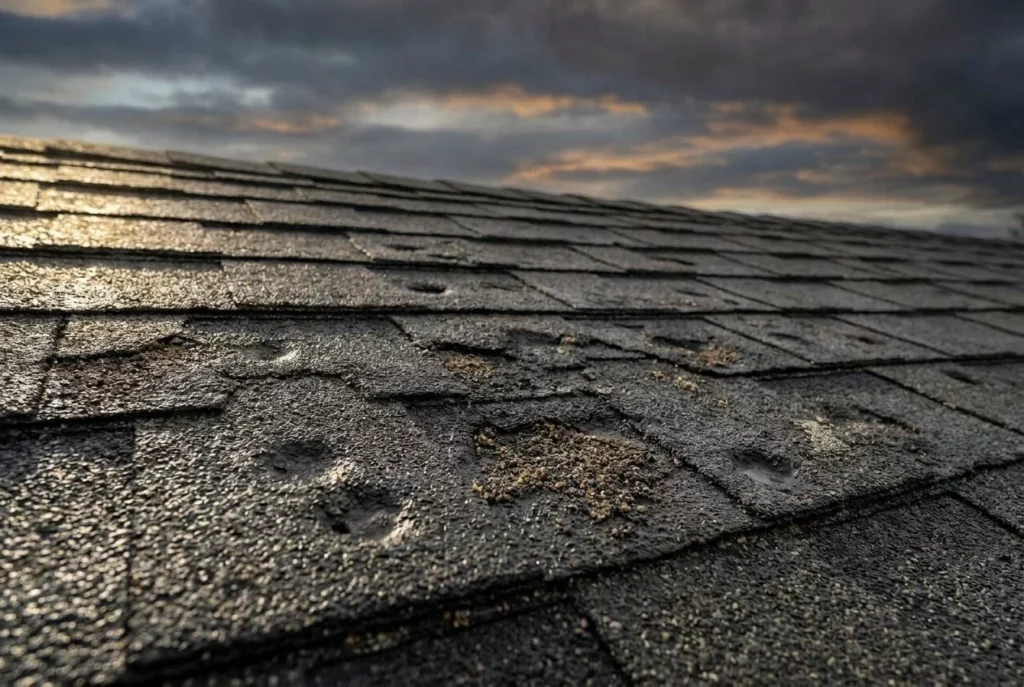
| Hail | Random impact marks, soft bruises, cracks, granule loss at impact points; dents in gutters, vents and A/C fins | Scattered across slopes facing the storm; soft metals around the house |
| Aging | Even granule wear, curling or cupping, brittle shingles, cracking across many shingles | Spread over the whole roof, often worst on the sunniest slopes |
An old, brittle roof is more likely to lose shingles in wind, and an insurer may argue the age caused the loss. That’s one reason clear photos taken soon after the storm, plus a dated record of the weather event, are so useful. If you saw dents in gutters or vents, the storm may have included hail, which is covered in more detail on our hail damage roof repair page.
Temporary Protection Until Repairs Are Made
If wind opened up the roof, the priority is keeping water out until a permanent repair can be made. The Minnesota Department of Commerce advises homeowners to take reasonable steps to protect their property after a storm, such as tarping a damaged roof, and to keep receipts for emergency repairs because your insurer may reimburse them.
What you can do from inside
- Put buckets or containers under drips and move furniture, electronics and rugs out of the way.
- Keep away from water near light fixtures, outlets and ceiling fans.
- Keep people out from under any ceiling that is bulging or sagging.
- In the attic, lay plastic sheeting over insulation below an active drip, stepping only on the framing.
Tarping is a job for a roofer
A properly installed emergency tarp extends past the damaged area, is secured so wind can’t get underneath it, and doesn’t add new holes in good shingles where it can be avoided. Doing that safely means working on a damaged, possibly wet roof, often in wind. Don’t put yourself on a ladder or roof to do it. An emergency roof repair crew can tarp the roof and photograph the damage before covering it.
Don’t wait too long
A few missing shingles may not leak in dry weather, but exposed underlayment isn’t meant to be the roof’s only protection, and unsealed shingles around the gap are likely to go in the next storm. Minnesota Commerce also points out that further damage may not be covered if you don’t make reasonable temporary repairs.
Documenting Wind Damage for Insurance
Wind damage is a common homeowners insurance claim, and good documentation makes the process smoother. Based on Minnesota Department of Commerce guidance:
- Photograph and video everything as soon as it’s safe. Get wide shots of each side of the house, close-ups of debris in the yard, and interior stains. Include something that shows the date, or keep the original files with their date stamps.
- Note the storm date and time. Save weather alerts or local news reports about the storm.
- Contact your insurer promptly. Have your policy number, a description of the damage and your photos ready, and write down your claim number and the adjuster’s contact information.
- Keep damaged materials if you can. A bag of blown-off shingles or a bent vent cover can help the adjuster.
- Keep receipts for tarps, emergency repairs and any other costs.
- Keep a log of every conversation: who you spoke with, when, and what they said.
Check your wind/hail deductible
Some Minnesota policies have a separate wind and hail deductible. Minnesota Commerce has noted that this deductible may be a set dollar amount or a percentage of the home’s replacement value, for example 1 percent or more. On a percentage deductible, your out-of-pocket share can be much larger than you expect, so check your declarations page before deciding whether to file.
Be careful with door-to-door contractors
Windstorms bring out-of-town contractors. Under Minnesota law, a residential contractor paid from insurance proceeds may not promise to pay or waive your deductible. Get a written, itemized estimate, verify the contractor’s state license with the Minnesota Department of Labor and Industry, and don’t sign anything on the spot.
Repair or Replace After Wind Damage?
Many wind-damaged roofs can be repaired. The asphalt roofing industry points out that shingle roofs are designed to be repairable: a roofer can carefully separate sealed shingles, replace damaged ones and hand-seal the new pieces so they bond to the course below.
When a repair makes sense
- Damage is limited to a few areas, such as one rake edge or a section of ridge.
- The surrounding shingles are still flexible and well sealed.
- Replacement shingles are a reasonable match. Leftover bundles from the original job help here; so does knowing the shingle brand, color and install year.
When replacement may be the better call
- Shingles are brittle and crack when lifted, so a repair would damage more than it fixes.
- Many shingles across multiple slopes are creased or unsealed.
- The roof has lost shingles in more than one storm.
- The decking is damaged, or the roof was near the end of its service life anyway.
A careful roof repair inspection will tell you which category your roof falls into. If you need a full replacement, it’s a good opportunity to choose shingles with a higher wind class and to make sure the edges are detailed to the manufacturer’s high-wind instructions.
Frequently Asked Questions
How much wind does it take to damage a roof?
It depends on the roof’s age, condition and installation. A well-sealed, correctly installed shingle roof is designed for the local code wind speed, while an older roof with unsealed tabs can lose shingles in much lighter winds.
Can I see roof wind damage from the ground?
Often, yes. Missing shingles, lifted edges, displaced ridge caps and debris in the yard are visible from the ground, but creased shingles and broken seals usually need a close inspection by a roofer.
Does homeowners insurance cover wind damage to a roof?
Most homeowners policies cover sudden wind damage, subject to your deductible, which may be a separate wind and hail deductible. Damage the insurer attributes to age or wear and tear is generally not covered, so document the damage soon after the storm.
Can lifted shingles be resealed?
Yes, if the shingles aren’t creased or torn. A roofer can hand-seal lifted tabs with asphalt roofing cement, but creased shingles have a broken mat and should be replaced.
What do ASTM D3161 Class F and D7158 Class H mean?
They are shingle wind ratings. Class F shingles pass the D3161 fan test at 110 mph, and Class H is the highest D7158 uplift class, rated for basic wind speeds up to 194 mph.
Is it safe to wait to repair a few missing shingles?
It’s not a good idea. Exposed underlayment isn’t meant to be the only barrier, the shingles next to the gap are likely loose, and your insurer may not cover further damage if you don’t make reasonable temporary repairs.
Wind damage is easy to underestimate because a roof can look fine from the street while dozens of shingles have lost their seal. A quick ground-level check after every major storm, good photos, and a professional look at anything suspicious will keep a small problem from turning into a leak.
Seeing missing or lifted shingles after a windstorm? Call Minneapolis Roofing Company at (888) 657-0348 for a free estimate.