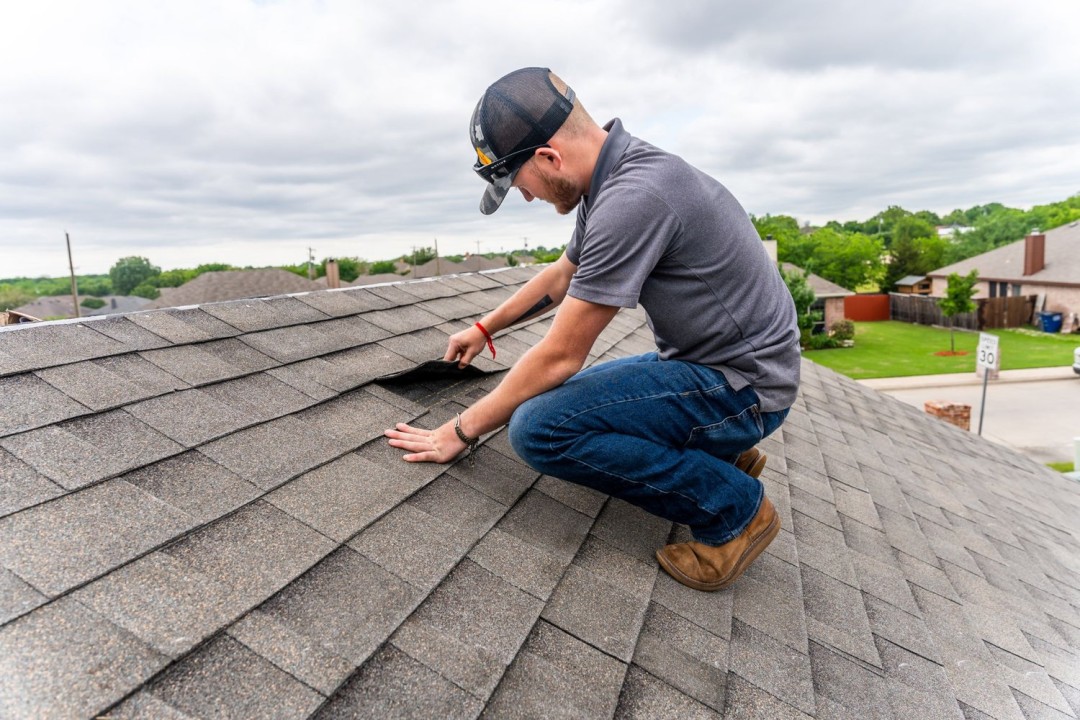
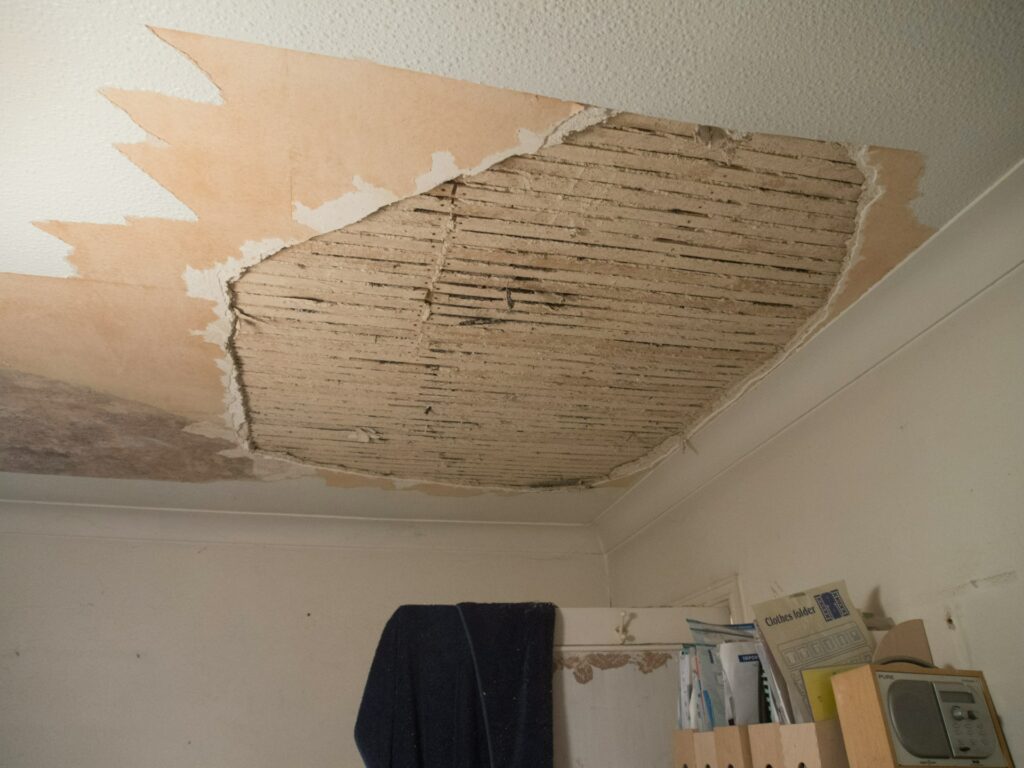
The repair or replace roof decision usually comes down to four things: how old the roof is, how much of it is damaged, what shape the decking underneath is in, and how many layers of shingles are already up there. Repair makes sense when the damage is limited and the rest of the roof has plenty of life left. Replacement makes sense when the roof is near the end of its service life, the damage is widespread, the decking is soft or rotted, or the roof already has two layers and code won’t allow another.
This guide walks through each decision factor, gives you a side-by-side decision table, and explains what the Minnesota Residential Code says about roofing over an existing roof. It’s written for Minneapolis and Twin Cities homeowners, where hail, ice dams and older housing stock all shape the answer.
In this article
- Repair or Replace Roof: The Short Answer
- Roof Repair vs Replacement Decision Table
- The Eight Factors That Decide It
- Minnesota Code Limits on Roof Layers and Re-Covers
- Roofing Over Old Shingles vs a Full Tear-Off
- Minneapolis Factors: Hail, Ice Dams and Older Homes
- What About Replacing Just One Section?
- Comparing Repair and Replacement Costs Over Time
- How to Get a Reliable Assessment
- Frequently Asked Questions
Repair or Replace Roof: The Short Answer
Most roofs don’t need replacing the first time something goes wrong. A few missing shingles after a windstorm, a cracked pipe boot or a lifted piece of flashing are classic repair jobs. The question changes when problems start stacking up, or when the roof is old enough that you’re paying to patch something that will need replacing soon anyway.
Repair usually makes sense when:
- The roof is well within its expected service life.
- Damage is confined to a small area, such as one slope, a valley or the flashing around a chimney or vent.
- The decking under the damaged area is still solid.
- Leaks have a clear, single cause that can be fixed.
- You can still get shingles that reasonably match the rest of the roof.
Replacement usually makes sense when:
- The roof is at or near the end of its expected life and shows general wear, such as curling, cracking or heavy granule loss across many slopes.
- Damage is spread across the roof, which is common after a serious hailstorm.
- The decking is soft, delaminated or rotted in more than isolated spots.
- You keep chasing leaks in different places.
- The roof already has two layers of shingles, so code won’t allow a third (more on that below).
Roof Repair vs Replacement Decision Table
Use this table as a starting point. One “replace” signal doesn’t automatically mean a new roof, but several of them together usually do.
| Factor | Leans toward repair | Leans toward replacement |
|---|---|---|
| Roof age | Well within expected life | Near or past expected life |
| Extent of damage | Small, localized area | Widespread or on several slopes |
| Number of layers | One layer, sound base | Two layers already (no re-cover allowed) |
| Decking | Solid, dry, no sagging | Soft spots, rot, delamination, sagging |
| Leaks | One leak with a clear cause | Repeated leaks in different places |
| Insurance | Damage below your deductible or not covered | Covered storm damage across the roof |
| Budget | Need a lower-cost fix now | Repair costs adding up on an aging roof |
| Resale plans | Staying put, roof has years left | Selling soon and roof is worn or damaged |
The Eight Factors That Decide It
1. Roof age
Age sets the context for everything else. A roof with many good years left is worth repairing; one near the end of its life often isn’t. InterNACHI’s published life-expectancy estimates put three-tab asphalt shingles at around 20 years and architectural (dimensional) shingles at around 30 years, and note that severe weather can shorten those numbers.
If you don’t know your roof’s age, check your home purchase inspection report, look for the reroofing permit in city records, or ask a roofer to estimate it from the shingle type and condition. In Minneapolis, a building permit is required for re-roofing, so a permit record is often the most reliable clue.
2. Extent and type of damage
Localized damage is usually repairable. Think of a handful of wind-torn shingles, a damaged ridge cap, or failed flashing at a chimney, skylight or wall. Widespread damage is different. If hail has bruised shingles across every slope, or the shingles are curling and shedding granules everywhere, a repair only fixes the worst spots while the rest of the roof keeps deteriorating.
The type of damage matters as much as the size. Flashing and pipe-boot failures are among the most common leak sources and are normally fixed without touching the rest of the roof. General aging of the shingles themselves can’t be repaired; it can only be replaced.
3. Number of existing layers
This is the factor that can make the decision for you. Under the Minnesota Residential Code, a roof that already has two layers of roof covering cannot be re-covered with a third. At that point, the only code-compliant path for a new roof is to tear off down to the deck. Even with one layer, a re-cover isn’t allowed if the existing roof is water-soaked or deteriorated. The Minnesota code section below explains the details.
4. Condition of the decking
The roof deck (the plywood, OSB or wood boards the shingles are nailed to) is the foundation for everything above it. Soft or spongy spots, sagging between rafters, delaminated plywood or rot from a long-term leak all point to a deeper problem. Small damaged areas can be cut out and replaced during a repair. Widespread deck damage usually means replacement, because you can’t properly fix the deck without removing the roofing over it.
Decking problems are often found only once the old shingles come off. That’s why a good replacement estimate should show a per-sheet price for any replacement decking, so there are no surprises.
5. Leak history
One leak with an obvious cause, like a cracked vent boot, is a repair. Repeated leaks in different places are a warning sign that the roof system as a whole is failing. Ongoing leaks can also damage insulation, drywall and framing, and can lead to mold, so the real cost of “one more patch” may be higher than it looks.
In Minnesota, be careful not to blame the shingles for every winter leak. Many winter leaks come from ice dams, which form because heat escaping into the attic melts snow on the upper roof. University of Minnesota Extension notes that heat loss from the house, mostly through air leaks, is the main driver. A new roof alone won’t solve that; air sealing and insulation will.
6. Insurance coverage
If a storm caused the damage, your homeowners policy may pay for repair or replacement, minus your deductible. Two policy details shape the outcome. First, whether your policy pays replacement cost value (RCV) or actual cash value (ACV), which subtracts depreciation for age, as the Minnesota Department of Commerce explains in its claims guidance. An older roof on an ACV policy may receive a much smaller payment. Second, your deductible: Minnesota Commerce notes that some policies use a separate wind or hail deductible, which can be a percentage of your home’s replacement value rather than a flat dollar figure.
If the damage is below your deductible, insurance won’t change the math, and the decision comes back to age, extent and budget. If you’re filing a claim, document the damage with photos and make reasonable temporary repairs to prevent further damage, as Minnesota Commerce recommends.
7. Budget and how long you’ll stay
A repair costs less today. A replacement resets the clock. If your roof has years of life left, a repair is usually the better use of money. If it’s near the end of its life, repeated repairs can add up to a meaningful share of a new roof’s cost, and you’ll still need the new roof.
A practical way to frame it: ask how many more years a repair is likely to buy, and compare that against the cost of replacing now. A roofer who gives you both options in writing makes this comparison much easier.
8. Resale plans
Buyers and their home inspectors look closely at roofs. A worn or damaged roof can become a negotiation point or a lender issue. In the 2025 Remodeling Impact Report from the National Association of Realtors, 37% of Realtors said they’d recommended new roofing to sellers before listing. On the cost side, the 2025 Cost vs. Value Report puts the national average resale value of an asphalt shingle roof replacement at about 67.5% of the job cost. In other words, a new roof rarely pays for itself at sale, but a failing one can cost you in negotiations.
Minnesota Code Limits on Roof Layers and Re-Covers
Minnesota’s residential building code is the Minnesota Residential Code (Minnesota Rules chapter 1309), which adopts the 2018 International Residential Code (IRC) with state amendments. Reroofing falls under IRC Section R908, which separates a roof replacement (removing the existing roofing down to the deck and installing new) from a roof recover (installing a new roof covering over the existing one).
When a re-cover is not allowed
Section R908.3.1.1 of the 2018 IRC says a roof recover is not permitted when:
- The existing roof or roof covering is water-soaked or has deteriorated to the point that it isn’t an adequate base for more roofing.
- The existing roof covering is slate, clay, cement or asbestos-cement tile.
- The existing roof has two or more applications of any type of roof covering.
The City of Minneapolis summarizes the practical result this way: overlays are allowed over one existing layer of roof covering when the conditions are met, and no overlays are allowed over wood shakes, slate, clay, cement or asbestos-cement tiles. The City of Bloomington’s reroofing handout puts it more simply: the code allows a total of two layers of asphalt shingles before a tear-off is required.
Other code points that affect the decision
- Permits: Minneapolis requires a building permit for all re-roofing work, except repairs involving less than one bundle of shingles. Repairs that involve roof framing need an additional permit and a framing inspection.
- Ice barrier: Minnesota requires an ice barrier from the eave edge to a point at least 24 inches inside the exterior wall line (detached accessory buildings with no conditioned space are exempt). With a tear-off, this is installed fresh. Under an exception in R908.3, an existing self-adhered ice barrier may be left in place and covered.
- Solid decking: Minnesota’s code requires asphalt shingles to be fastened to solidly sheathed decks or 1-inch nominal wood boards. Shingle manufacturers may add tighter limits on board width and gaps, which matters for older homes with board decks.
- Manufacturer instructions: The code requires roof coverings to be installed according to the manufacturer’s instructions. Where the instructions are stricter than the code, follow the instructions.
Codes change. Minnesota’s Department of Labor and Industry opened rulemaking in 2026 to consider adopting the 2024 IRC, so confirm current requirements with the Minneapolis building department (or your own city, if you’re elsewhere in the metro) before you finalize plans.
Roofing Over Old Shingles vs a Full Tear-Off
If your roof has a single layer in decent shape, a re-cover (overlay) may be legal. It can save on tear-off labor and disposal. Many roofers still recommend a full tear-off, and the reasons are worth understanding before you choose.
- You can’t see the deck. An overlay hides soft spots, rot and previous leak damage. A tear-off exposes the deck so problems are fixed before new shingles go on.
- Flashing is harder to do right. Flashings at walls, chimneys and valleys need to be rebuilt to the manufacturer’s instructions. That’s easier and more reliable on a stripped roof.
- Bumps show through. New shingles tend to telegraph the shape of the old ones, especially if the old layer is curled.
- Ice barrier details. In Minnesota, the eave ice barrier is a key defense against ice-dam leaks. A tear-off lets the installer put down a new, continuous membrane directly on the deck.
- It uses up your last option. Once you have two layers, the next roof must be a tear-off. An overlay now simply moves that cost to later.
- Warranty terms. Check the shingle manufacturer’s installation instructions and warranty terms for re-cover applications, since requirements vary by product.
Minneapolis Factors: Hail, Ice Dams and Older Homes
Hail season
Minnesota’s hail season typically begins in late May in the southern part of the state and early June farther north, according to University of Minnesota climatologist Mark Seeley. A major hailstorm is one of the most common reasons a Twin Cities roof goes from “repairable” to “replace.” Hail damage tends to be scattered across every slope that faced the storm, so patching individual shingles rarely addresses it. If you think your roof was hit, see our hail damage roof repair page for what to look for from the ground.
Ice dams and winter leaks
Ice-dam leaks are common in Minneapolis and can look like a roof failure from inside the house. Before deciding a roof needs replacing, find out whether the leak came from the shingles themselves or from ice backing up at the eaves. If the attic has heat loss problems, a new roof will still form ice dams. The fix is usually air sealing and insulation, plus a properly installed ice barrier when the roof is eventually replaced.
Older homes and board decks
Many older Minneapolis homes have roof decks made of individual wood boards rather than plywood or OSB. The City of Minneapolis notes that many shingle manufacturers don’t allow their shingles on wood boards wider than 6 inches nominal, and may require board gaps of no more than 1/8 inch so nails don’t miss the boards. Neighboring St. Paul’s reroofing policy requires gaps larger than 5/8 inch to be filled in or overlaid with new sheathing. A board deck that doesn’t meet these limits typically needs new sheathing, which only happens during a tear-off.
Wind ratings
Cities around the metro, including Bloomington and St. Paul, point to a 115 mph ultimate design wind speed for residential roofs and require shingles tested to that level. Any replacement shingle should carry the appropriate wind classification on its packaging.
What About Replacing Just One Section?
Sometimes the damage is concentrated on one slope, such as the side that took the brunt of a storm or the slope under an overhanging tree. Replacing a single section can be a reasonable middle ground, but it comes with trade-offs:
- Matching: Even the same product from the same manufacturer can look different from shingles that have weathered for years. Discontinued colors or styles make matching harder.
- Tie-ins: The joint between old and new roofing needs careful detailing so water doesn’t get underneath.
- Layers and permits still apply: If the section already has two layers, it must be torn off. Work larger than a minor repair needs a permit in Minneapolis.
- Uneven aging: You’ll have two roof sections at different points in their lifespans, so you may face another project sooner on the older side.
Partial replacement makes the most sense when the rest of the roof is relatively new and the damaged area is clearly separated, such as a garage roof or a separate dormer slope.
Comparing Repair and Replacement Costs Over Time
A repair almost always costs less upfront. The question is how much life it buys. One way to compare is to estimate the cost per remaining year: divide a repair’s cost by the number of years the roof is realistically expected to last afterward, and compare that with a new roof’s cost spread across its expected life.
For a sense of scale, the 2025 Cost vs. Value Report lists a national average job cost of about $31,871 for an asphalt shingle roof replacement in its model project. Treat that as a national ballpark only. Real prices vary widely with roof size, pitch, number of layers to remove, decking repairs, materials and access. A written estimate for your own roof is the only way to know your number. Our roof replacement cost guide explains what drives the price in the Minneapolis area.
When you collect estimates, ask for both a repair quote and a replacement quote from the same roofer. Seeing the two side by side, with the same assumptions, is the clearest way to make the call.
How to Get a Reliable Assessment
Please don’t climb onto your roof to check it yourself. Falls are a serious risk, especially on steep pitches or in snow and ice. Here’s what you can safely do, and what a professional should do.
What you can check from the ground or inside
- Use binoculars to look for missing, curled or cracked shingles and damaged flashing.
- Look for shingle granules collecting at downspout outlets.
- Check gutters, downspouts and roof vents for dents after a hailstorm.
- In the attic, with a flashlight, look for water stains, daylight through the deck, damp insulation or dark spots on the sheathing.
- Inside the house, watch for ceiling stains, peeling paint near the ceiling and musty odors.
What a professional inspection should cover
- Shingle condition across every slope, not just the obvious damage.
- Flashing at chimneys, walls, skylights, valleys and vents.
- Signs of soft or damaged decking.
- The number of existing layers.
- Attic ventilation and signs of moisture or ice-dam history.
- Photos of what was found, so you can see it yourself.
Ask for a written report and estimate that explains the recommendation, not just a price. If one roofer recommends replacement and another says repair, the photos and reasoning will help you decide. Our roof inspection page explains what a thorough inspection includes, and our roof repair and roof replacement pages cover each option in more detail.
Frequently Asked Questions
How do I know if my roof should be repaired or replaced?
Repair if the roof is well within its expected life, the damage is localized and the decking is solid. Replace if the roof is near the end of its life, damage is widespread, the decking is deteriorated or the roof already has two layers.
Can I put new shingles over old shingles in Minnesota?
Only in limited cases. The Minnesota Residential Code allows a re-cover over one existing layer in sound condition, but not when the roof already has two layers, is water-soaked or deteriorated, or is covered with slate, clay, cement or asbestos-cement tile.
How many layers of shingles are allowed on a roof in Minneapolis?
A total of two layers. Once a roof has two layers of roof covering, code requires tearing off down to the deck before a new roof is installed.
Do I need a permit to repair or replace my roof in Minneapolis?
Minneapolis requires a building permit for all re-roofing work, except repairs involving less than one bundle of shingles. Repairs that involve roof framing need an additional permit and a framing inspection.
Is it worth repairing a 20-year-old roof?
It depends on the shingle type and condition. A 20-year-old three-tab roof is near the end of its typical life, so major repairs may not be worth it, while an architectural shingle roof in good shape may still justify a targeted repair.
Will insurance pay to replace my whole roof?
If covered storm damage is widespread, your policy may pay for replacement minus your deductible. How much you receive depends on whether your policy pays replacement cost or actual cash value, and on your wind or hail deductible.
Does a new roof increase home value?
It helps, but rarely dollar for dollar. The 2025 Cost vs. Value Report puts the national average resale value of an asphalt shingle roof replacement at about 67.5% of its cost, and a worn roof can become a sticking point with buyers.
The right answer depends on your roof’s age, the damage, the decking and the layers already in place. Gather the facts from a careful inspection, get both options priced in writing, and weigh them against how long you plan to stay in the home.
If you’d like a professional opinion on whether your Minneapolis roof needs repair or replacement, call (888) 657-0348 to request a free estimate.